

ASTA, PAÑO Y DRIZA
25 Sep @ 08:00 - 27 Nov @ 17:00

ASTA, PAÑO Y DRIZA
25SEP · 27NOV 2026
ASTA, PAÑO Y DRIZA
Joël Mestre
Notes while painting.
“Notre vie est du vent tissé”
(J. Joubert,1814)
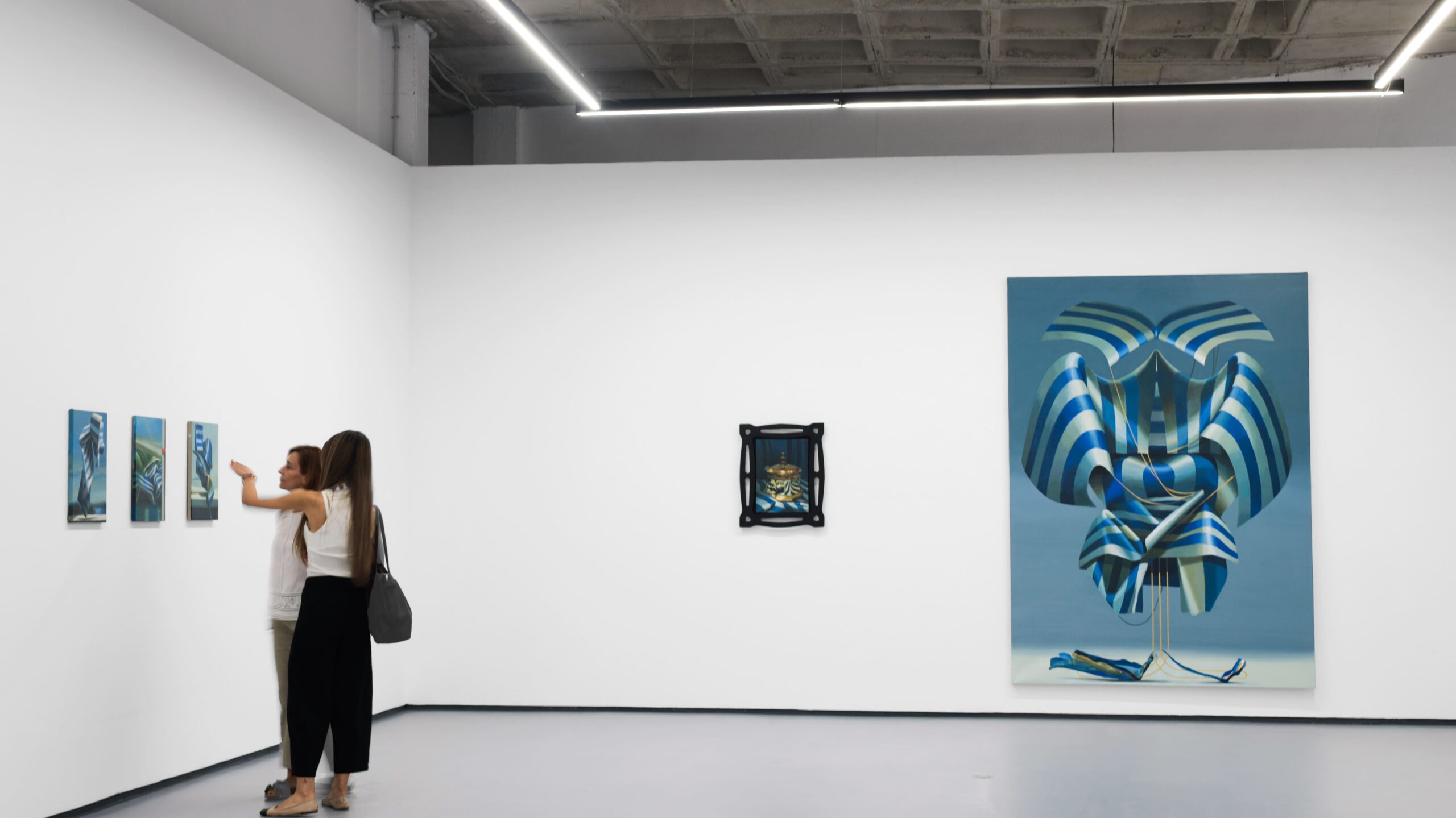
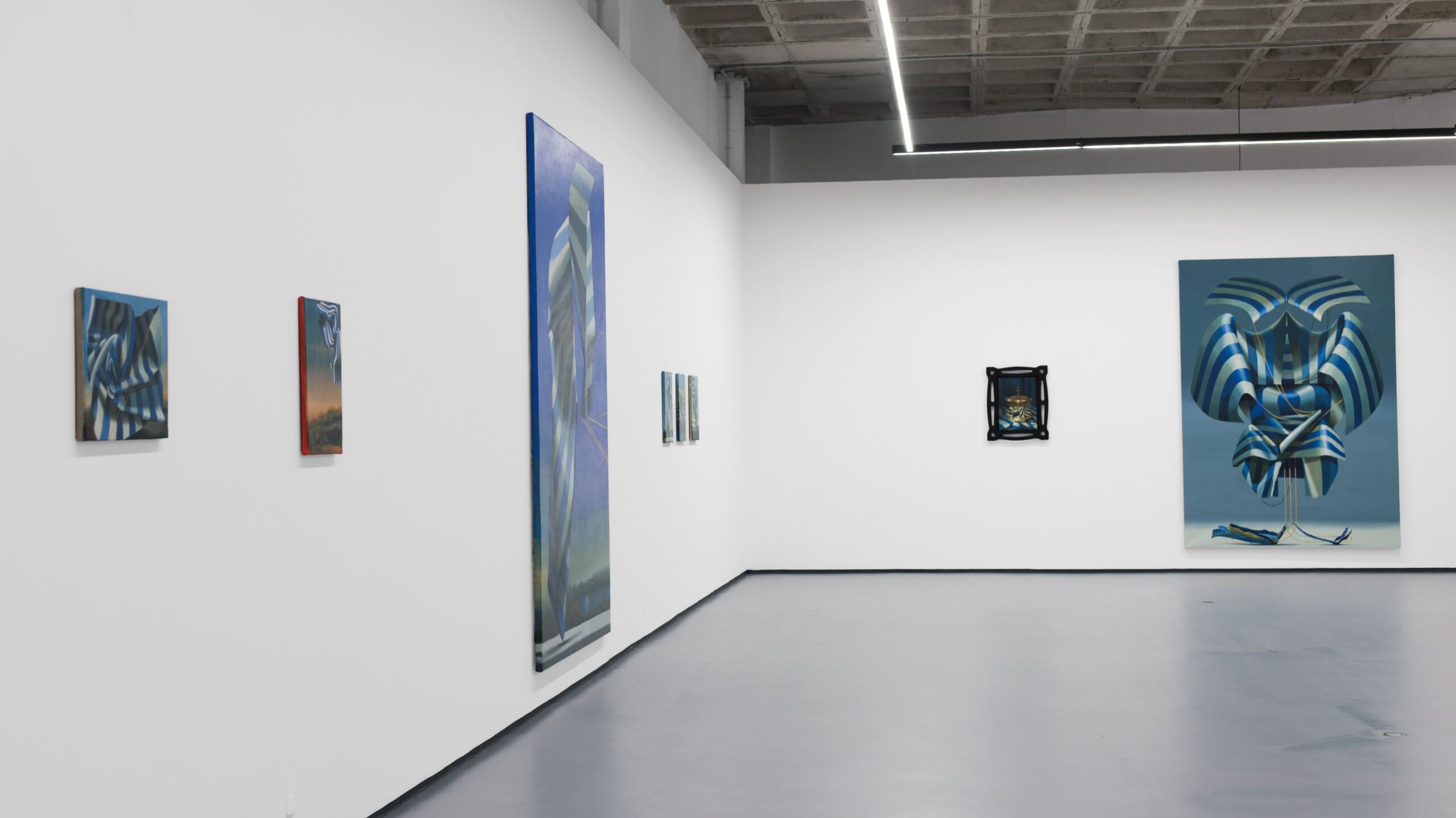
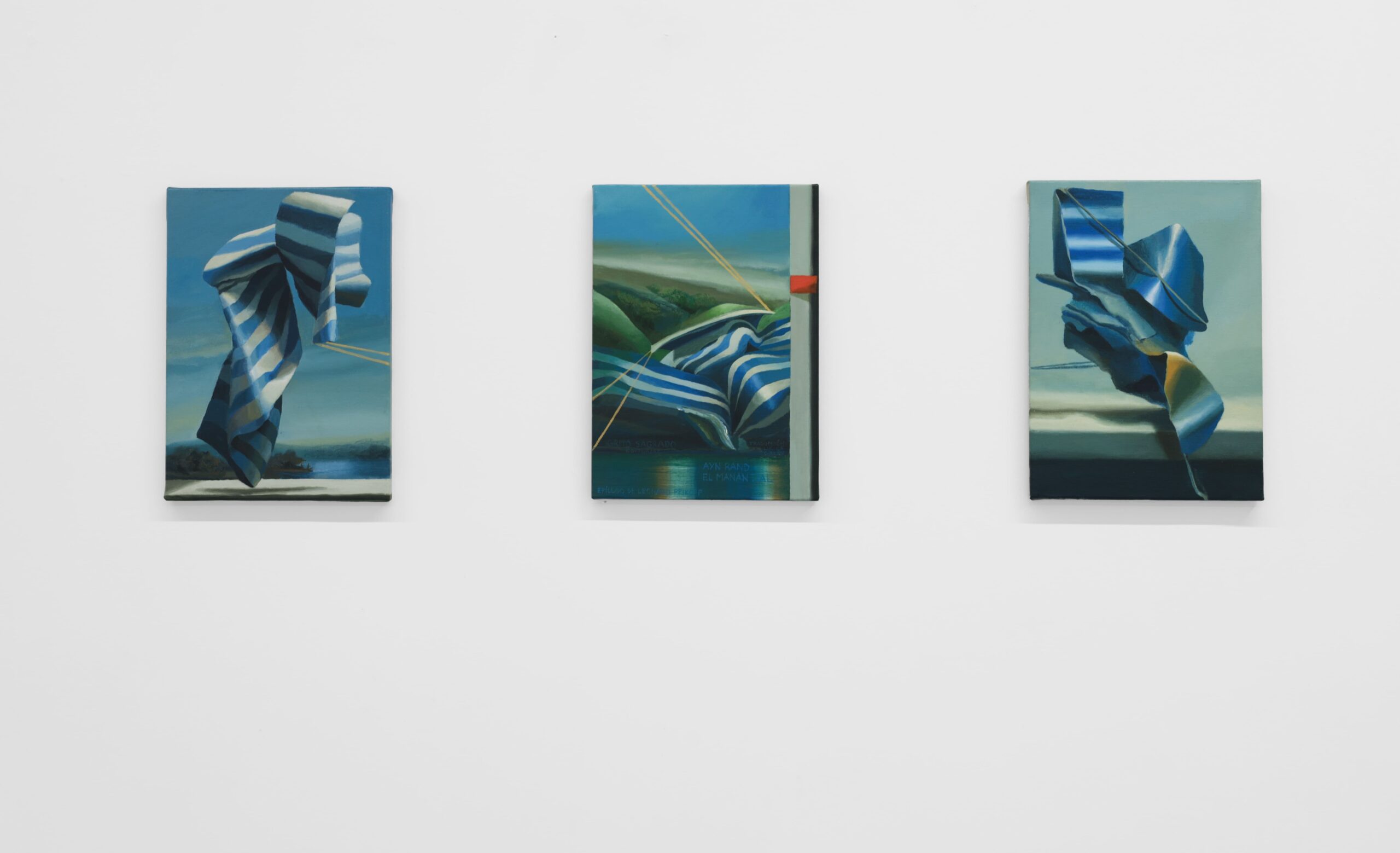
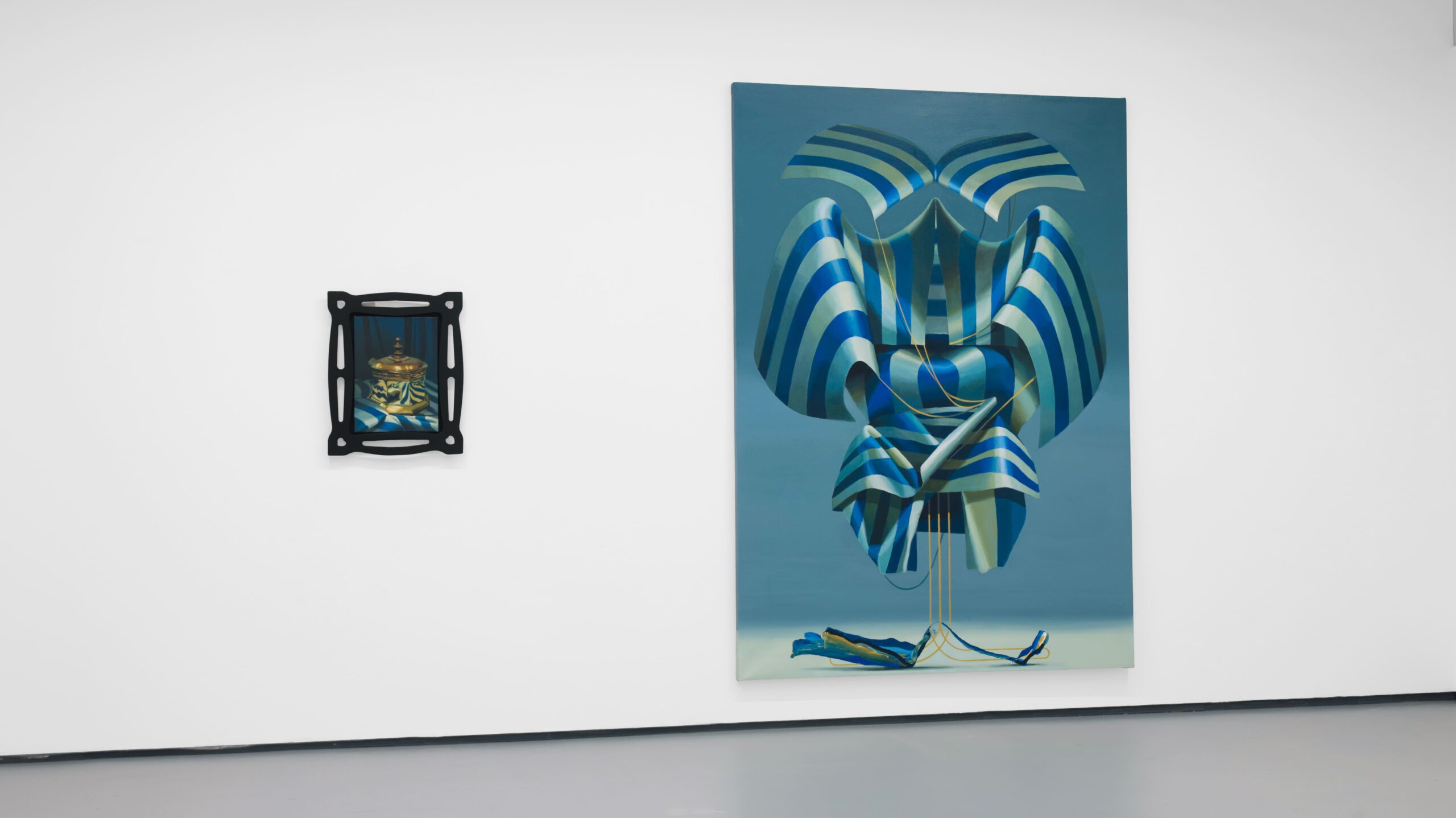
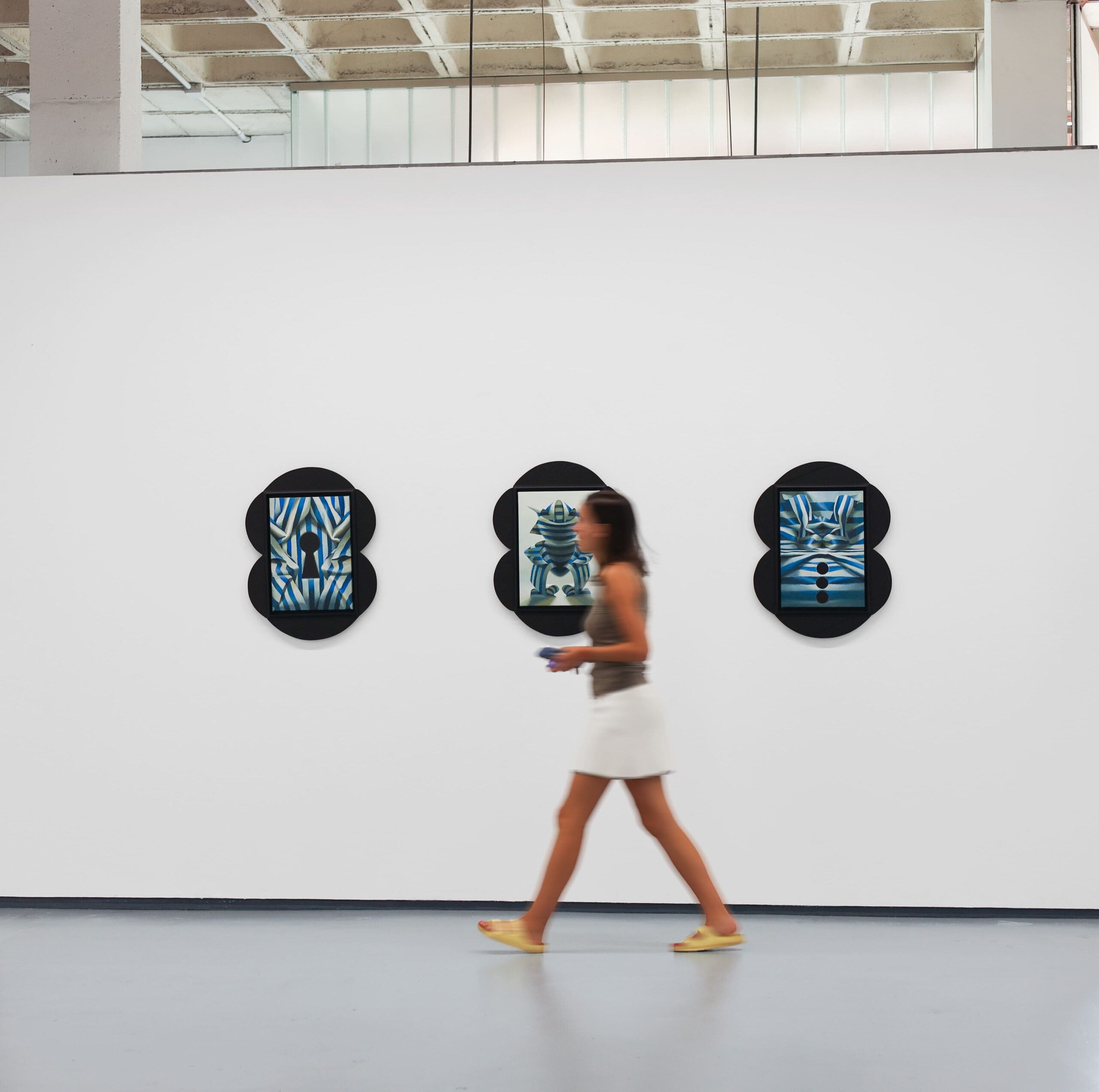
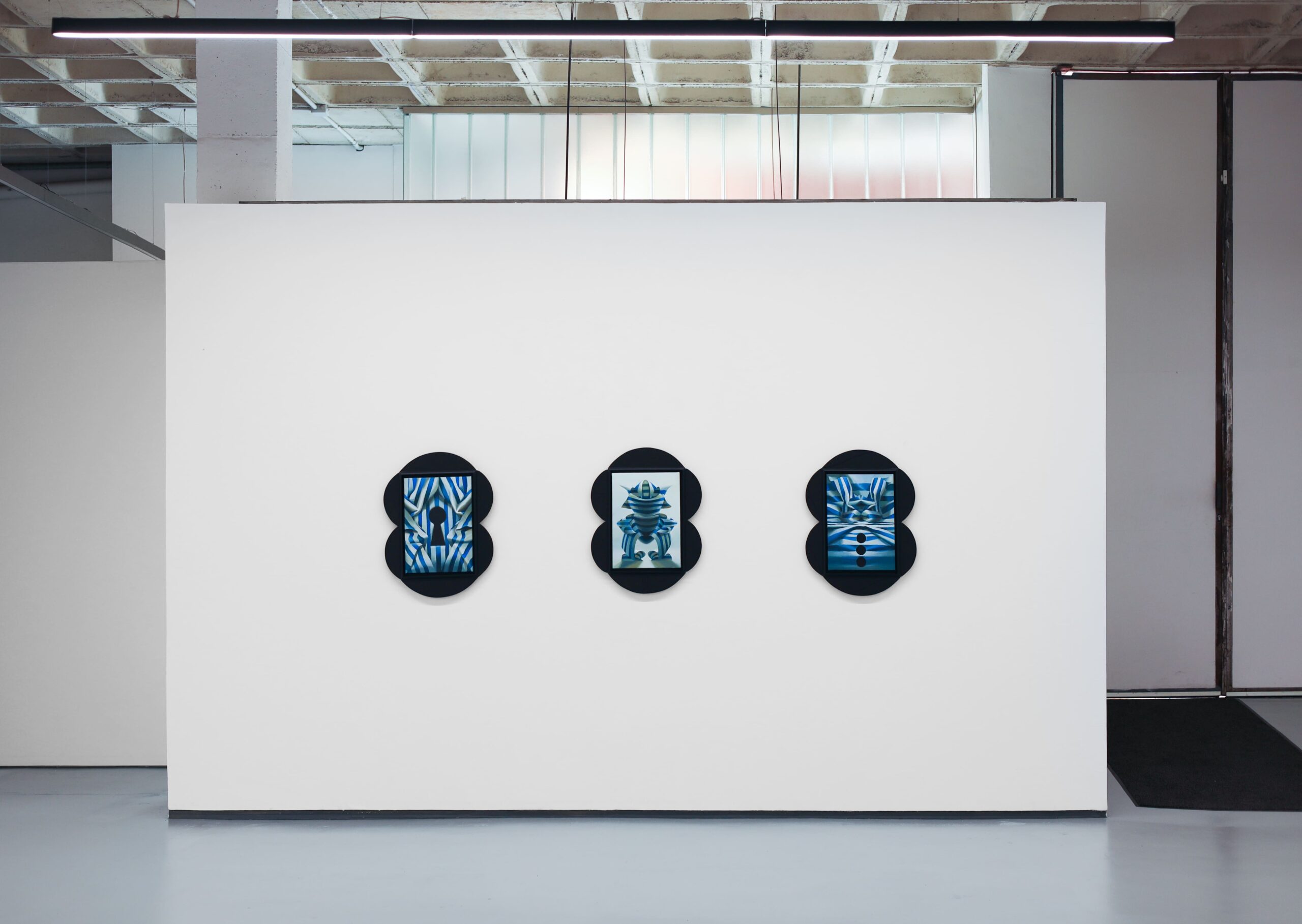
1_ I’ve gone back to a painting made in 2017. The solution I found back then now seems insufficient, so I’ve decided to continue working on it. The three words that make up this title “Pole, cloth and halyard” point us toward the concept of a flag, a symbolic level that, curiously, becomes disarmed once the term is broken down into its three elements. It’s interesting how, united, these three words let us visualize what is technically a flag, but when we regard them as independent objects, their symbolic charge is renewed. This interests me in the process of painting, because it highlights the importance of the title as a possible generator of visual syntax, but also as a possible frame, prior and necessary, for the painting stated, exhibited, or the beginning of a story; and therefore, for the whole chain of ideas that this combination can set off in the face of the fiction of painting. The title knows things its author doesn’t, which is why a text is often an unpredictable avenue of speculation, an ally in the process as surprising as the surface of a canvas itself. I have the sense that this symbolic, political and identity-bound charge, so conventional to the flag, when extrapolated to painting, can broaden its meaning and its representation to encompass a far more ambiguous, open and heterogeneous territory: a setting where formal and psychological episodes of every kind converge. The object, the landscape, is no longer just a place but a system of interrogation. So let this first fictional description serve, from here on, to propose a pact and situate ourselves in a critical, appealing, and perhaps even comic place.
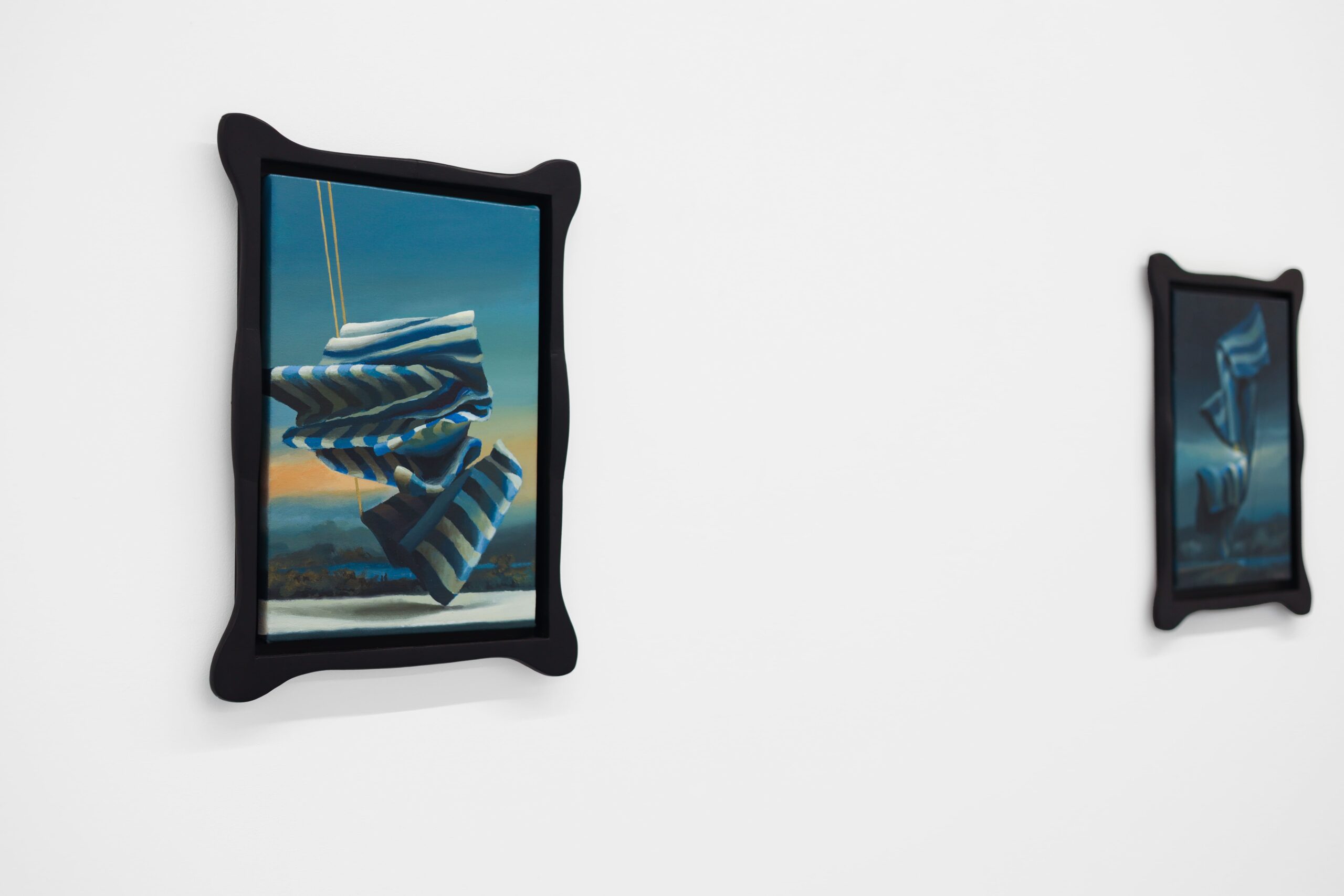
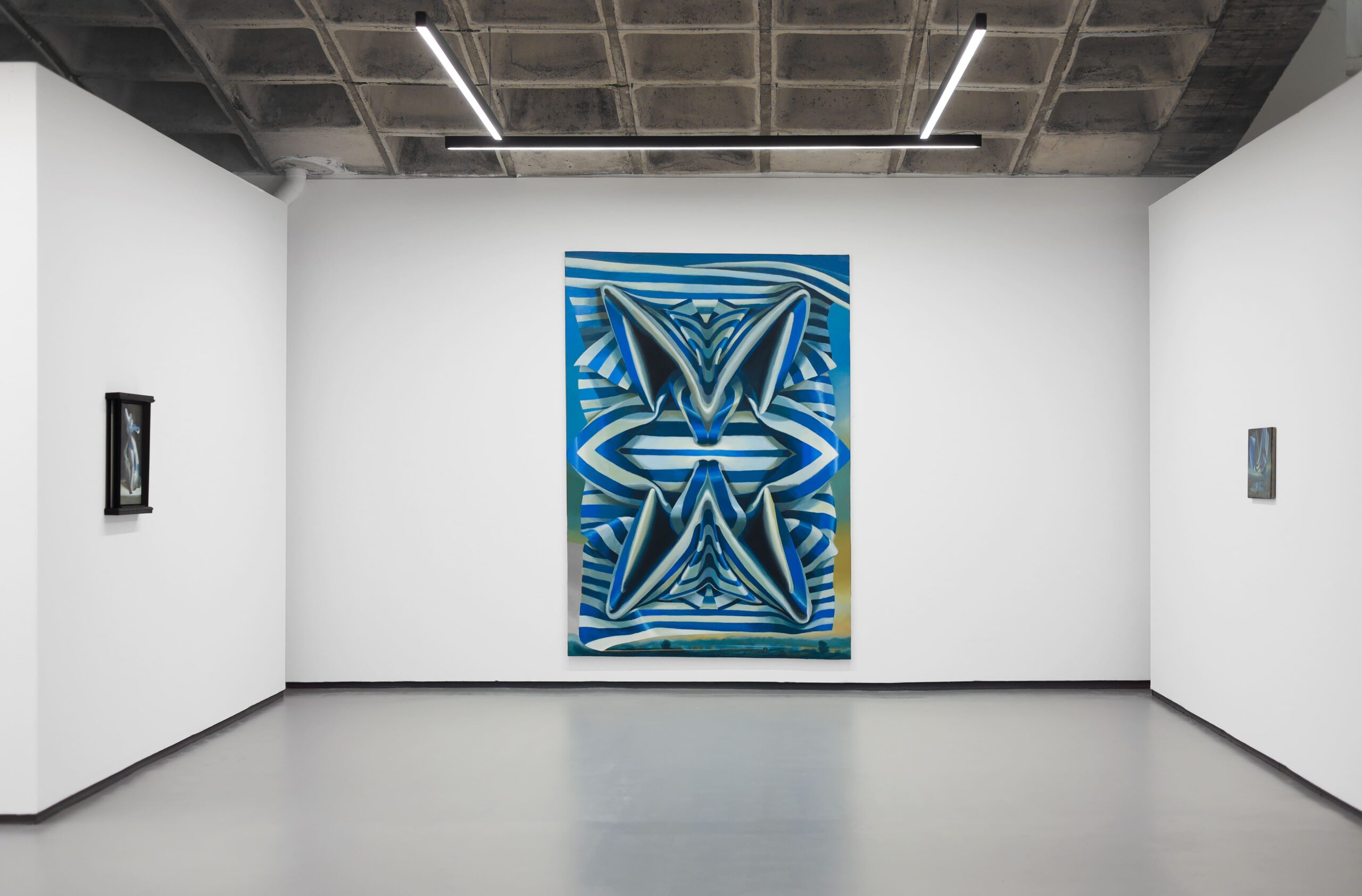
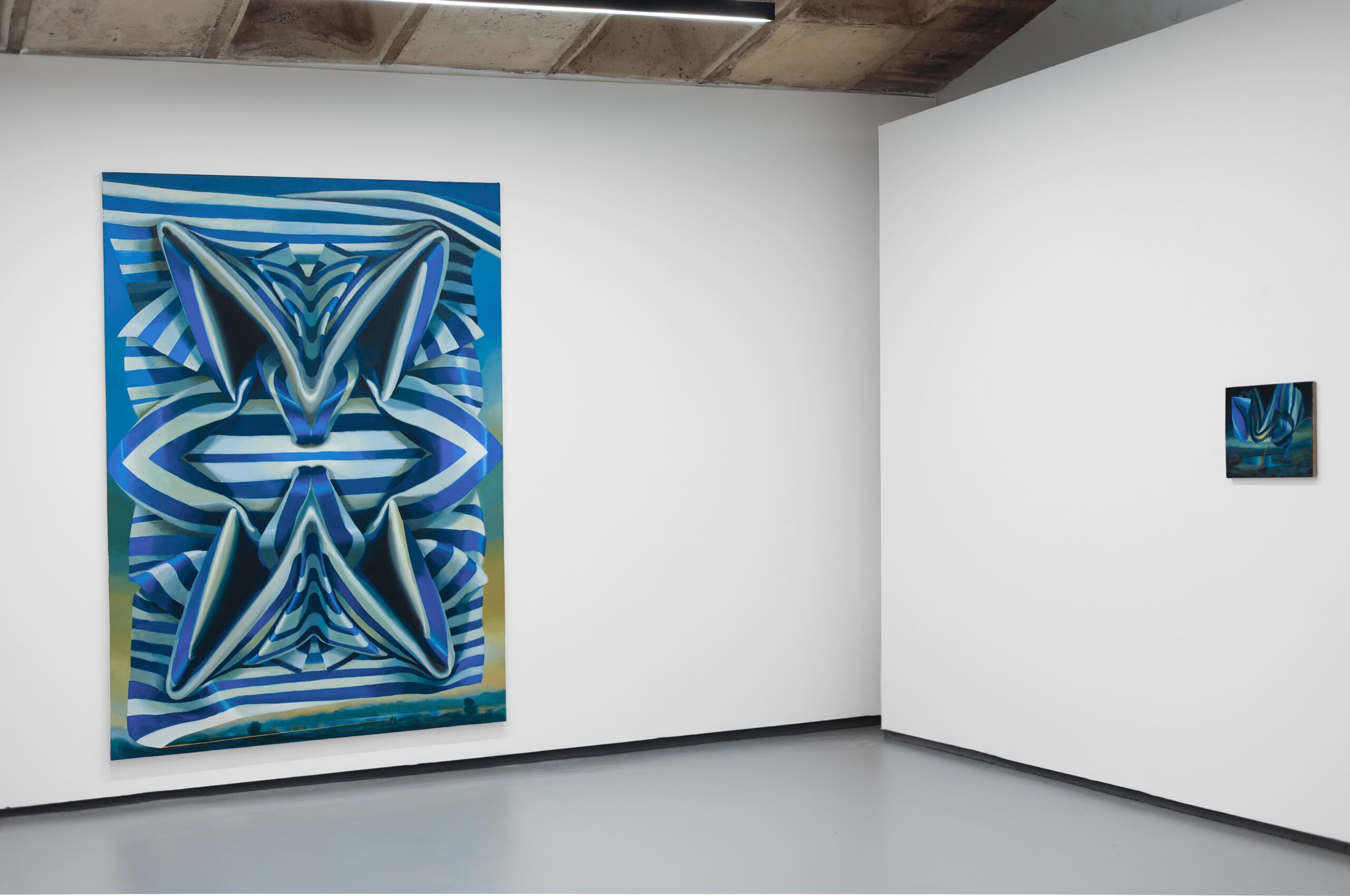
2_ A, P and D have bought an awning that was on sale. It product comes folded in a transparent plastic bag. At first glance you can make out a blue-and-white striped fabric; it looks like a synthetic weave, with a fine but fairly rigid warp, well made, with generous eyelets for tying the guy-lines included in the kit. It’s a heavy, flexible package. On the paper cover inside, a beautiful photograph gives an idea of its span and its usefulness on days out in the country and at the beach. The image makes them smile; it evokes an unshakeable sense of well-being. The information sheet highlights the warnings, recommendations, and its compliance with European Union regulations. The instructions state that it’s easy to assemble, that nothing can go wrong, and everything suggests it’s the product they need. A short time later, A, P and D go together to spend the day near a reservoir; there they unfold the awning and the assembly becomes complicated, some wind has picked up off setting it up spirals out of control. The awning seems to grow ever bigger, and they, ever smaller and more useless. The day has reached its dusk and the awning has become the protagonist, a surprising threat impossible to govern. The mishaps of the assembly continue their course and they still believe they can regain control, but it’s now nothing more than an enormous, capriciously reconfiguring pastime. The cloth plays with asymmetry, with the chiaroscuro of its folds, with all the hyperbolic scale available to it. In the landscape there is calm, an aerial perspective that softens the apparent threat. There are caves, chasms and small ravines, water and abundant vegetation. The characters seem to lose themselves in the landscape; they begin to stroll about, idle and carefree, under a twilight glow, perhaps they argue, a dog barks, they talk about books, about work and about worries, about domestic matters and family.
3_ The misfortunes of A, P and D have just confirmed that their world is not as perfect as it seemed. Chance has triggered a perverse setback. The wind is an element we can barely see, and of which we only manage to witness the consequences. These events remind them once again that their sense of security in the world is pure appearance. But what might seem like a problem has turned into entertainment, and this praise of idleness into an act of rebellion. In the system of equivalences that painting employs through color and form, we find that the objects closest and most familiar to us are the most permeable to our projections, from the kindest and most innocent to the most perverse and malicious behavior, even when its ill intent aims only to excite sensuality and defy reason. In F.T. Vischer’s novel Auch Einer (1879), let it be translated as Another One, objects and events rebel suspiciously until they unleash the narrator’s hilarity, in a thoroughly romantic and twilight-lit setting. The protagonist recognizes, in that trance of disorder among things, how he succumbs to a sensation of the sublime. To accept contingency means accepting that our deepest certainties come with no guarantee, that nothing assures us things will turn out well, but far from driving us to despair, this condition may make us freer, more responsible for our own destiny, and more compassionate toward others.
4_ When intuition takes hold of the process, references often arrive post pictum, after the work has been painted, which is thrilling in itself, because the result seems like an anticipation of what you’ll come across some time later. That memory of the future is a very appealing paradox that breaks with the tedious line of time.
5_ Pay attention to those areas of shadow generated by the folds, which appear almost automatically during the process. Changes in the direction of the wind twist the fabrics unpredictably. Light, matter, gesture, all give meaning to that pliancy of the cloth, before which all activity halts and is suspended. Let us slide into those shadows. We’re growing ever more accustomed to those peaks and troughs of crossed, fluctuating data in balance sheets and statistics. The French engineer Pierre Bézier long ago gave us digital tools to construct those curves by shifting nodes and inflection points. Painting, however, does without them, as does Michelangelo Antonioni in his final short film (Lo sguardo di Michelangelo, 2004). At 92 years old, the filmmaker silently contemplates the imposing tomb of Julius II. The dim light of the Basilica of San Pietro in Vincoli barely illuminates Michelangelo’s marble carving of Moses. Antonioni runs his fingertips over the few folds within his reach, while his lips seem to whisper something to us.
In any observation there is always an effect of duplicity: two things are perceived at once, what is seen and what is known, and it is to this pairing that we owe much of our visual experience. John Ruskin expressed, with striking vehemence, his fascination with the Turnerian mystery, with those vague, blurred brushstrokes that, within just a few centimeters, evoke events unfolding at the distance of a deep horizon. But Ruskin did not stop at technical skill; he dwelt instead on the very nature of the everyday, asking not to what degree this mystery exists, but at what point in the object the illusion it holds begins.
6_ There’s something epic about starting a new painting, v the ambition of a conquest, but also the suspicion of a failure. Even the most optimistic and generous painting, that of David Hockney, sometimes stumbles into disappointment. In his latest series of 82 portraits, one friend wants to hide his face; another doesn’t even show up. Yet the displeasure is quickly redirected toward his particular state of grace. Hockney’s realism seems to embody a strange, happy pessimism.
Also well known is the journey of Ossian’s Dream, the painting Ingres made for Napoleon, which the artist himself took up again thirty years later to unsettle, with his new intervention, academics and avant-gardists alike. Today his painting rests, with all its oddities and dazzling fiction, in the Museum of Montauban as an “ébauche,” a sketch measuring 348 x 275 cm.
The writer and journalist Joan Didion recounts (through an interview with Norman Mailer) how every beginning of a text, of a painting, I would add, has as much to do with our psychic strength, and how it’s necessary to assume a position of authority in order to be able to say that the way you’re writing it, or painting it, is the only way it happened. Mailer speaks of ego as an indispensable creative force that cannot fail, and that unmistakably manifests itself between that starting line and the acceleration one must take on until reaching that moment of intellectual activity in which the words arrive as they should, and in order.
In the speech that the architect Howard Roark delivers at the end of Ayn Rand’s novel The Fountainhead, we again find the root of that sovereign creative strength, individuality as an epic and inalienable value. When a painting reaches that state of grace in which everything happening within it flows under the clause “it can only be this way,” fiction is served.
7_ Reading is a mystery, a strange activity. One never quite knows what, or whom, one will encounter in that trance; there is something transformative in it that takes us further than mere recognition. Extrapolating that experience to painting is another enigma, since painting neither illustrates nor mentions passages of the story, but instead explores that transformative effect of reading outside the book itself. Painting, like Manganelli’s literature, has a strange usefulness beyond that possible monument to words, or to the very matter of painting itself. It has nothing to do with the generative filling we’ve grown used to with digital interpolation, completing images with data gathered from the immediate surroundings. Pascal Quignard has warned us, on occasion, with seriousness and a certain irony, of the danger of reading: of the risk of that fascinating experience of reading and wandering without knowing for certain where you’re headed or what result you’ll get, and of the possible destabilization of becoming subject to the emotion of a page or a literary event. Reading, like music, is the solace of our imagination.
8_ Every time I reread Giorgio Manganelli’s La palude definitiva, it strikes me more and more as a treatise on painting, a praise of process, a celebration of the path, one I imagine we could transfer to any craft or skill. In every task there is always a lurking satisfaction, a budding joy, and even a possible disappointment. But in this unfinished story, barely a hundred pages long, painting is never once mentioned. Manganelli describes a shifting, changing place, at times appealing and at other times abject; it is an immersion in a landscape where fatality creates an amusing unease not only for the reader but also for the narrator, who, terrified by the power of words, often ends up laughing. It’s as if Manganelli were writing what, only seconds earlier, he did not know or had not even imagined. In this, the act of writing comes very close to that of painting. Manganelli thus reveals his admiration, his amusement, his contempt for the present moment, and for a few hours allows the reader to see how the real world becomes an abstraction, an amorphous substance that carries us into a particular way of being in the world. Reaching that pact with Manganelli isn’t difficult; for the painter, the deception he invites us into feels quite familiar. Ambiguity, uncertainty, fear, fatality, joy, the resonances of memory and hyperbolic rhetoric are recurring mechanisms in painting of every era.
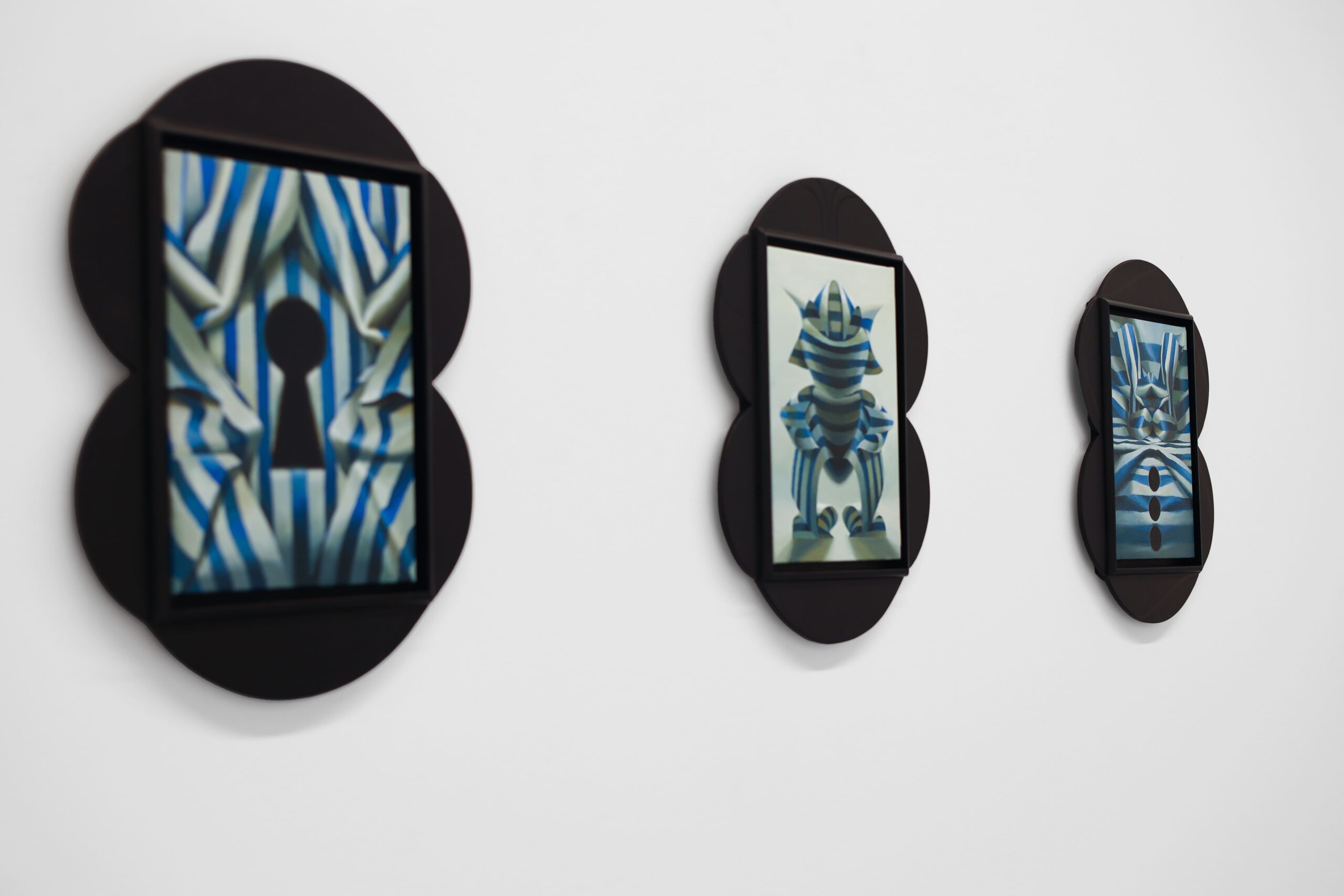
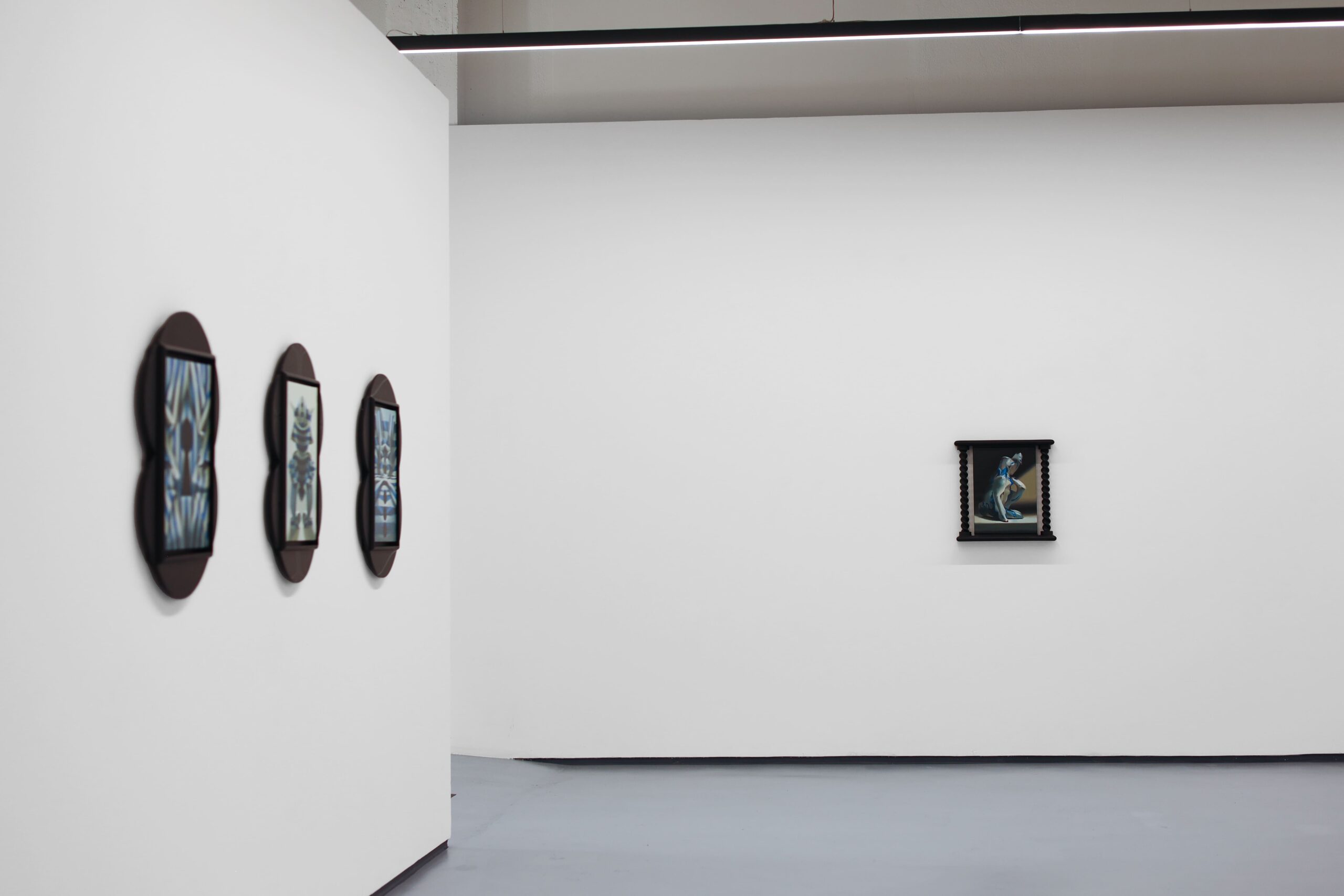
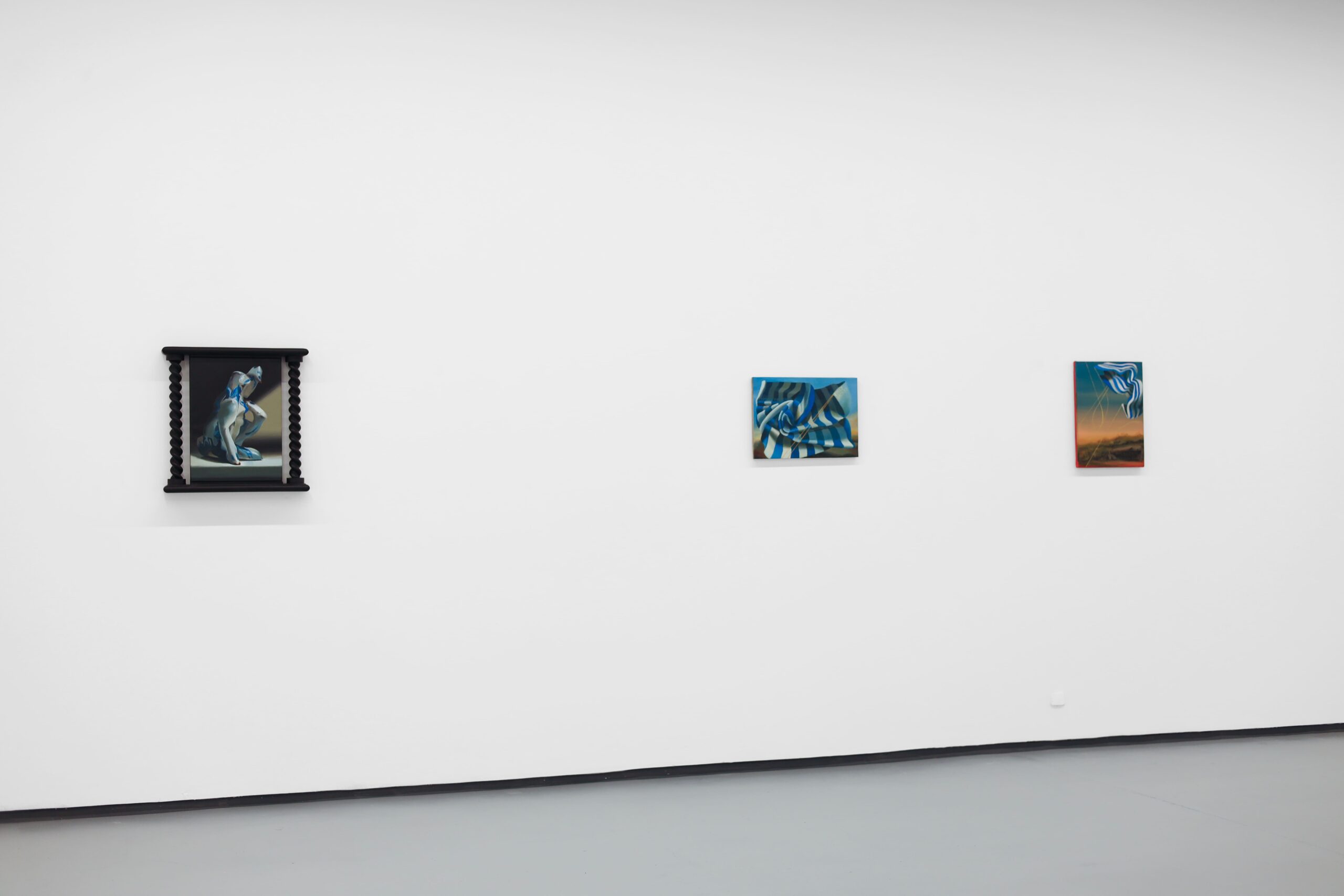
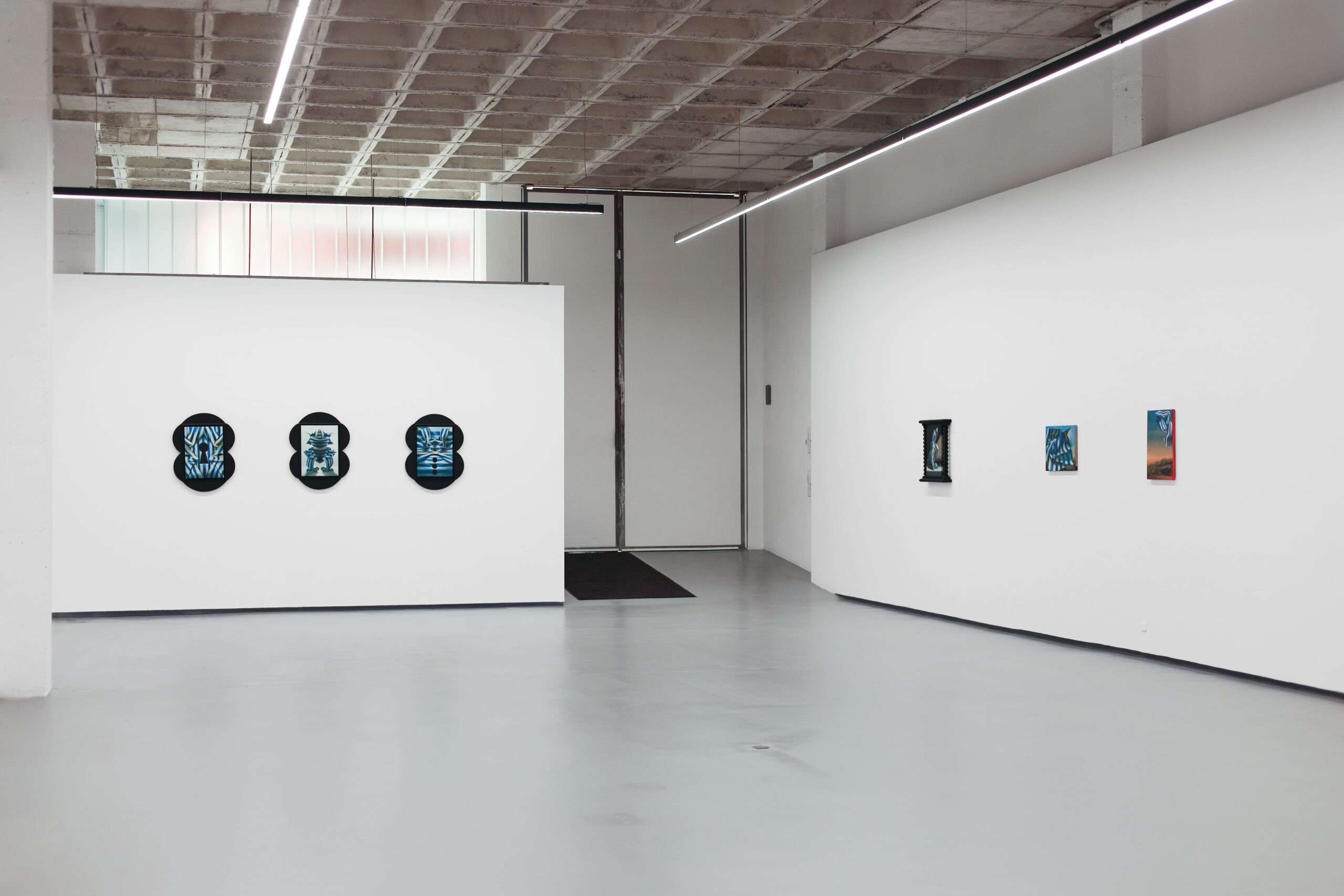
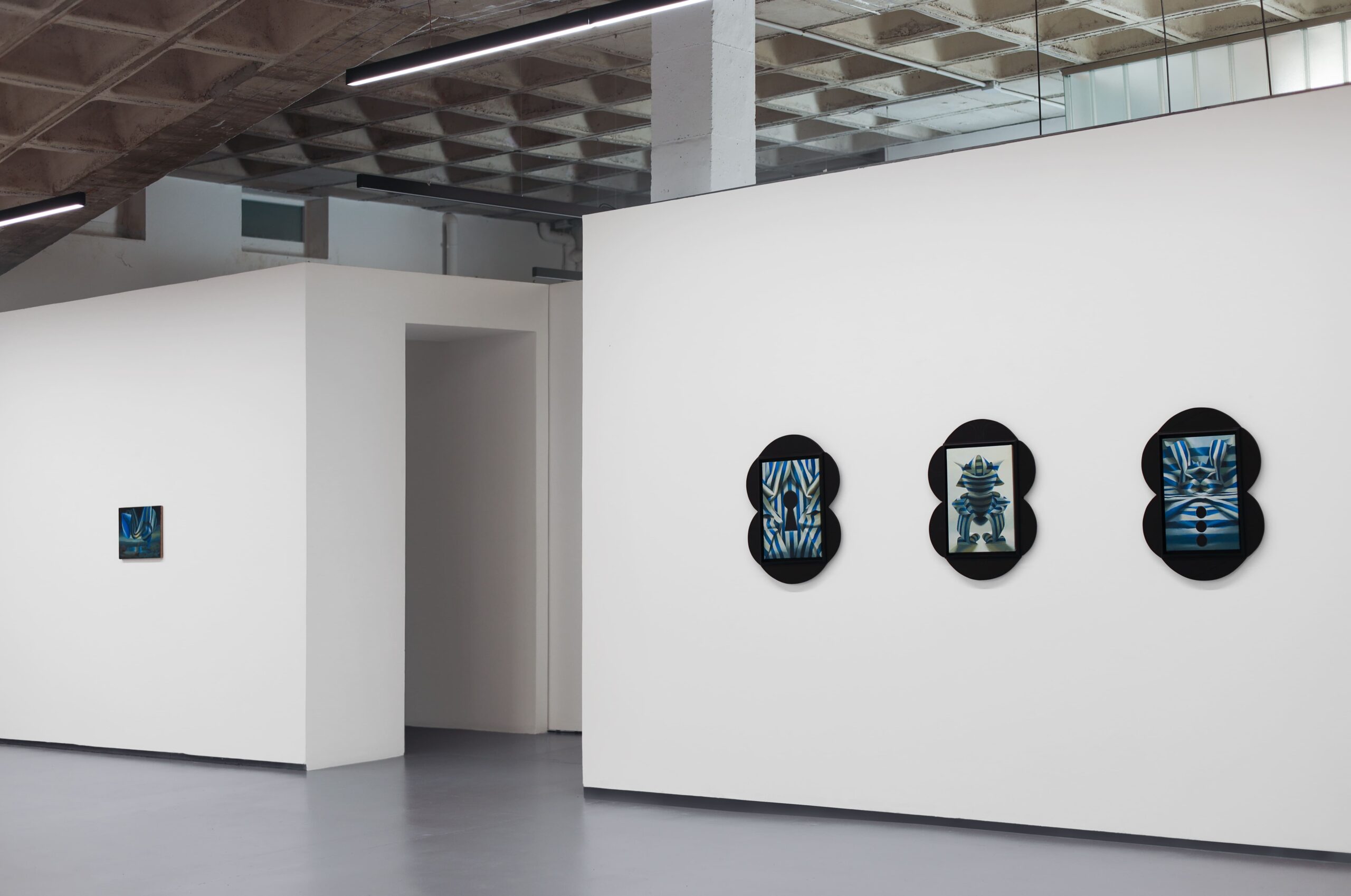
9_ The frame is perhaps one of the most complex and unsettling objects that interact with a painting; getting it right requires attention to multiple factors, from structural functions to narrative, documentary and iconographic details. It is, without doubt, one more channel of communication, an element charged with visual stimuli and semiotic and aesthetic devices. Finding the iconoplastic concomitance between frame and painting means achieving a synchrony between the abstract level and representation. Its configuration aspires to a possible encounter with what takes place on the canvas. Through a principle of proximity, our visual system manages to combine neighboring, even contiguous, information. The six frame prototypes designed and built for this series of paintings are part of the staging: an element of transition and camouflage between the painting and its surroundings that slows down observation. They are hybrid frames with a floating profile (or box frame) and a lobed, tabernacle-like perimeter following the Baroque tradition, made using an ebonizing process (the black coloring of ebony wood).
10_ Theater envelops the world, says Juan Mayorga; like a frame of powerful fictions, theater offers itself to us with the seductive aim of making our reality far more visible. Theater has much of truth in it, and painting has much of theater. Being able to create spaces of fiction is one of the most fascinating goals of both disciplines: they are times and surfaces that not only envelop us but onto which we project part of who we are, so that this extension of the visible can take place. Conclusions about the use of fiction as a strategy almost always point toward an aesthetic pleasure in imitation, and remind us that our relationship with the world remains indebted to it and precarious with respect to ourselves; that is why fiction never ceases to be the ideal stage on which to renegotiate and repair this matter. If the spectacle that life offers cannot be kept hidden, we cannot stop building artifices, chimeras, proposals of something possible without being so, if only to look more closely and perhaps show what the eye does not see. To approach any subject through Painting is to admit that many fronts of approach and speculation will open up; it is a place governed by strange laws, a process that may lead us to construct a possible sense of that experience. And I say possible, because there is nothing more uncertain than the mirage of a painting, or painting as the solution to nothing, unless it is the spell and the mystery it proposes there as an alternative.
SOBRE EL ARTISTA:
Linked to Spanish post-conceptual figuration, and specifically to the painting that emerged during the 1990s, he took part in the traveling group exhibition Muelle de Levante (1994), curated by Juan Manuel Bonet, which toured Spain. His work explores the traditional procedures of painting and their relationship with literature, technology and the new media. He has participated in international fairs including ARCO, Miami, Brussels, Santander, Lisbon and Pulse New York, among others. As a visual artist, he has received grants from the Davalos-Fletcher Foundation, the Alfons Roig grant from the Diputación de Valencia, the Ministry of Foreign Affairs fellowship at the Spanish Academy in Rome, and the Endesa Grant. His work is represented in the collections of IVAM, ARTIUM, Fundación Endesa, Banco de España, BBVA Collection, DKV Art Collection, Caja Madrid, and others.
He holds a PhD in Fine Arts from the Universitat Politècnica de València (UPV), where he is Associate Professor in the Department of Painting and a member of the Art and Environment Research Centre (CIAE_UPV).
Eduardo Balanza // Música para ver, tocar y oler. – Diario ABC
Meeting: Mariano Navarro, Fernando Castro, Paco Celorrio y Laura Vinós, moderada por Sema D’Acosta
CAMPING MARBELLA
Ricardo León: Camping Marbella Exhibition: 2nd April – 17th May, 2022 The Yusto / Giner Gallery presents the first individual exhibition of Ricardo León in its space in Marbella. In Camping Marbella, León appropriates degraded images, since these documents...
Ana Barriga // “La entrevista final” last interview on paper by the newspaper El Mundo
UNDERGROUND SPIRITUAL UNIT
Pow Martinez: Underground spiritual unit Exhibition: 25th February – 9th April, 2022 Opening: Friday 25th February, from 7 to 9pm. Yusto Giner Gallery, C/ Barquillo 25, 28004 Madrid. The Yusto / Giner Gallery presents the first individual exhibition of Pow Martinez...
New monograph by Angeles Agrela
Yusto / Giner Gallery is thrilled to present the monograph Ángeles Agrela, the first book published by the gallery With an essay by Anna Stothart Design by Manigua Printed by Brizzolis Ángeles Agrela, 2021 30.50 x 24 x 3.30 cm 312 pages English, Spanish and...