

RAINBOWS AT THE EDGE OF SORROW
6 Mar @ 08:00 - 16 May @ 17:00

RAINBOWS AT THE EDGE OF SORROW
6MAR · 16MAY 2026
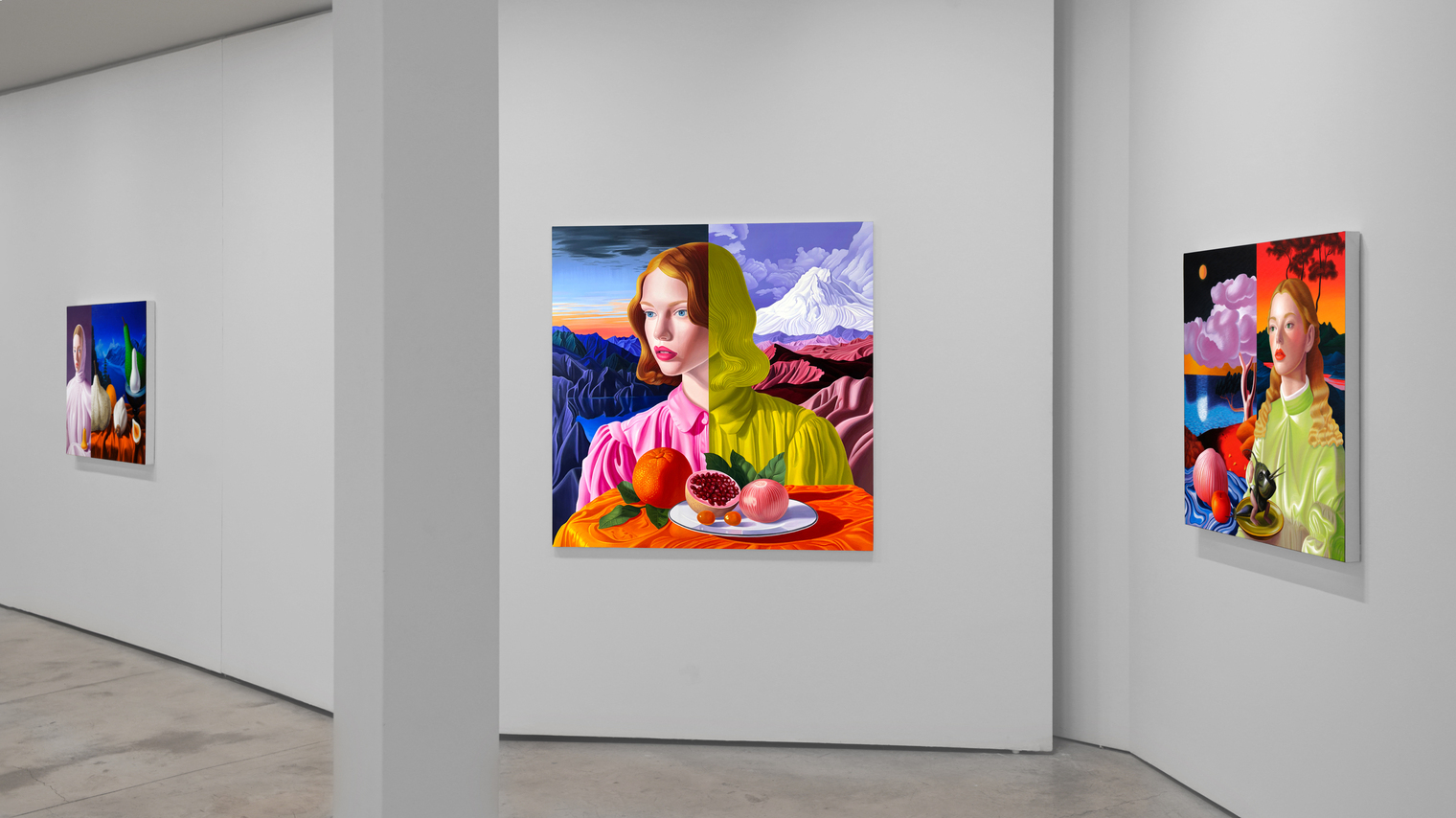
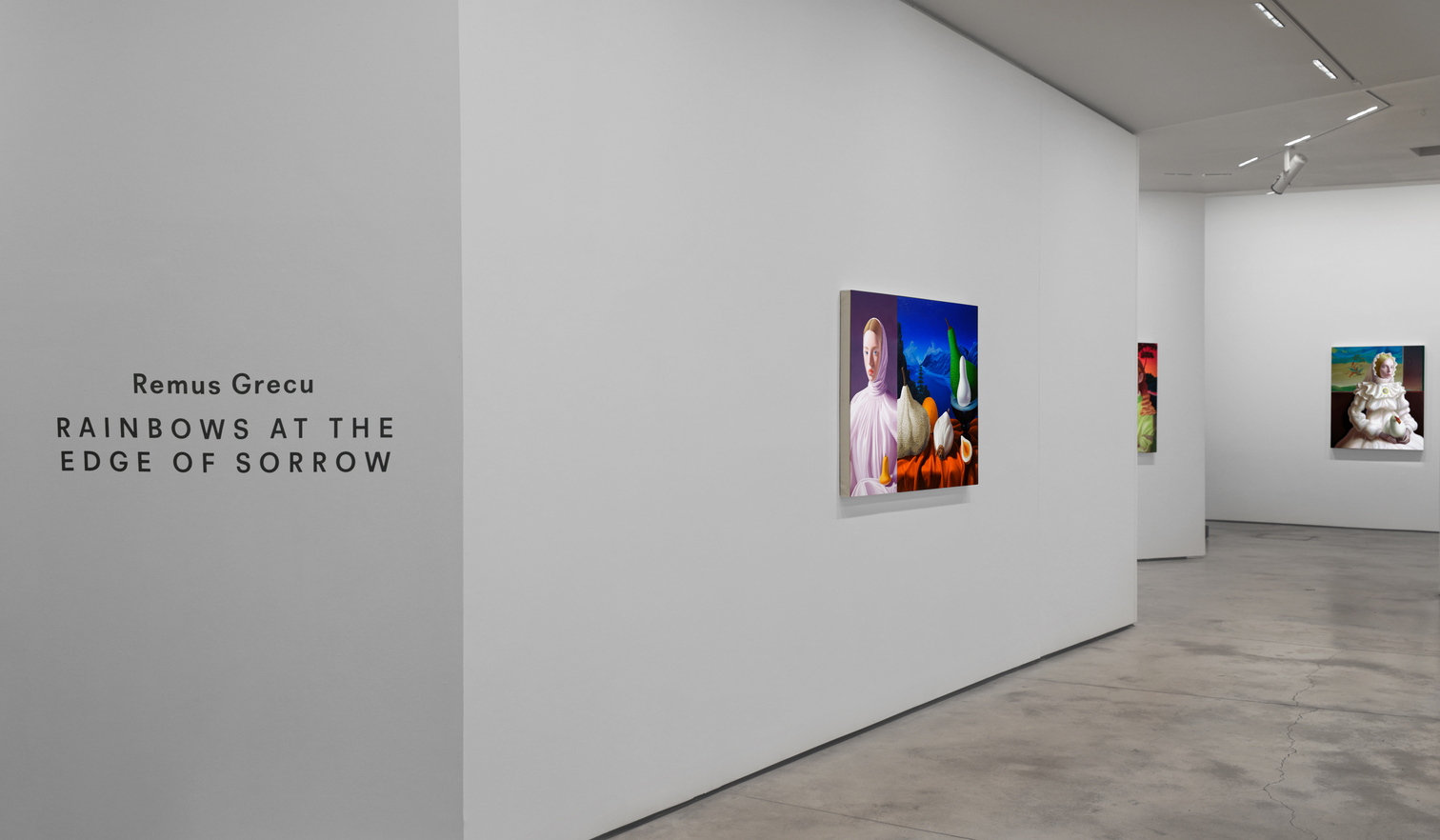
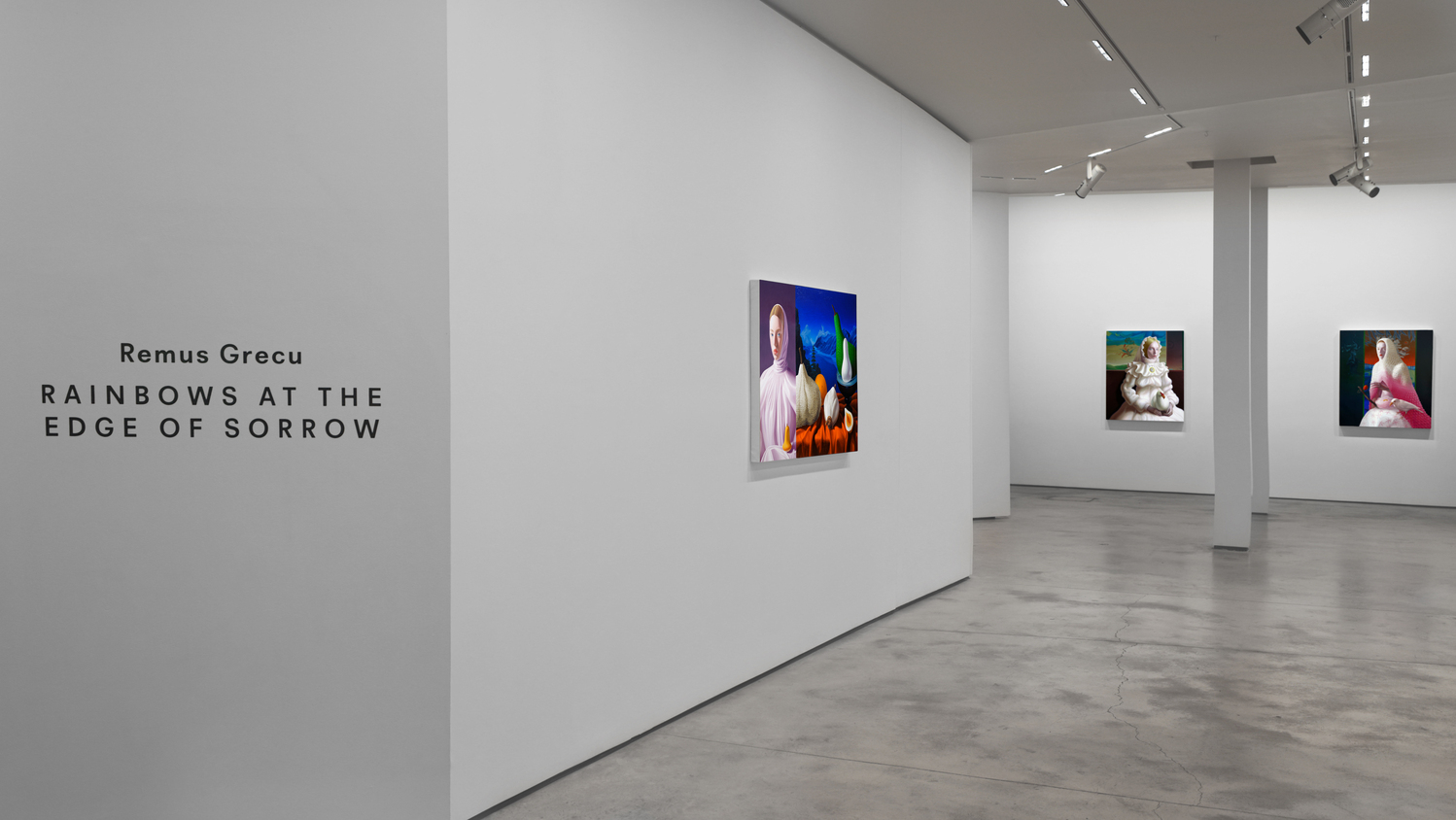
RAINBOWS AT THE EDGE OF SORROW
REMUS GRECU
YUSTO / GINER presents “Rainbows at the edge of sorrow” at its Madrid space, a solo exhibition by the artist Remus Grecu, with text written by the curator Sasha Bovojev.
The common thread among Las Meninas by Velázquez, The Clothed Maja or The Nude Maja by Goya, da Vinci’s La Gioconda, or countless portraits by Picasso is their focus on a female protagonist. The female portrait has long been a cornerstone of figurative painting, a motif artists have returned to across centuries, constantly reworking its form and meaning. It is within this ongoing evolution that Remus Grecu’s most recent series of paintings positions itself, reflecting a new shift in how this familiar subject is approached and understood.
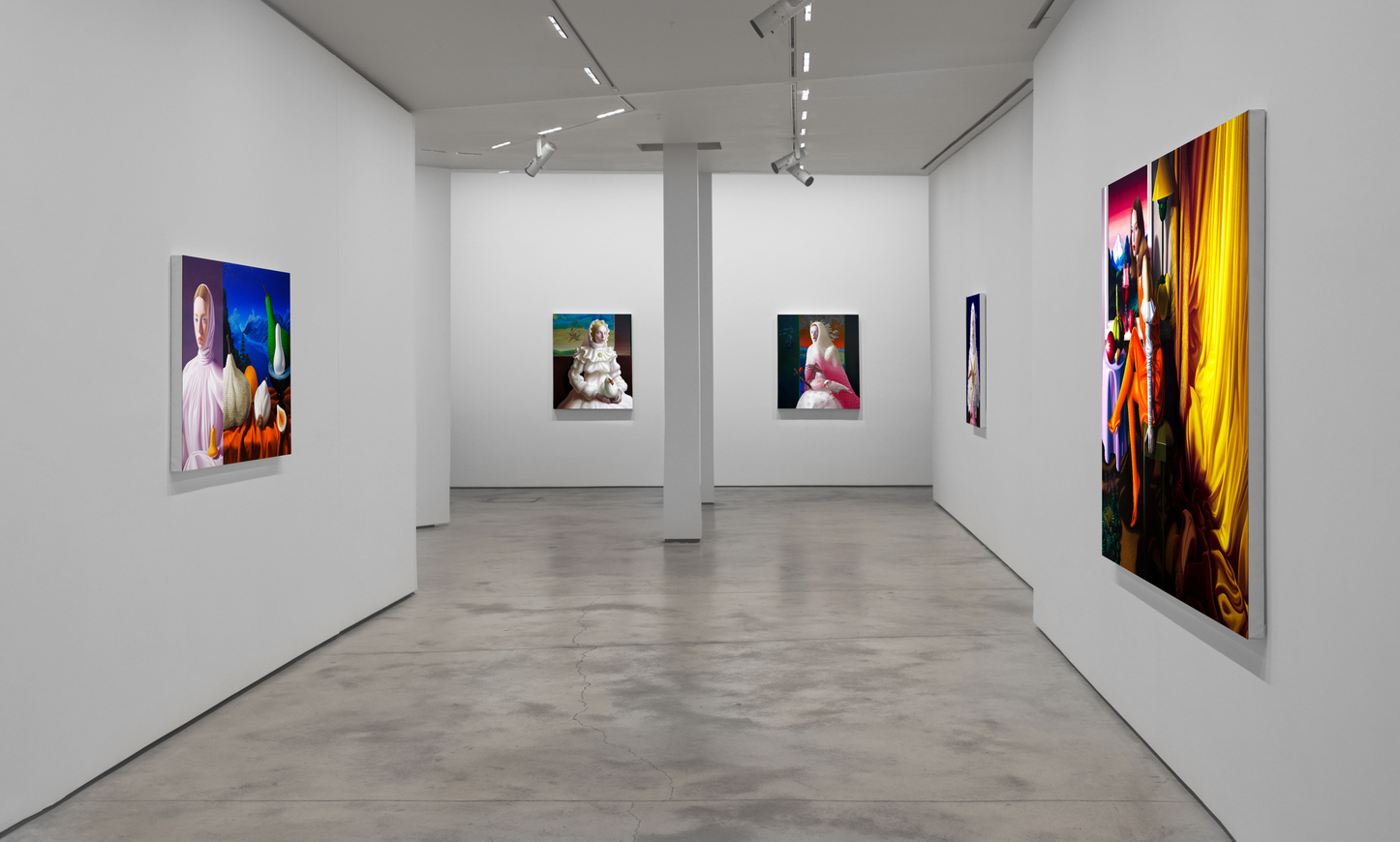
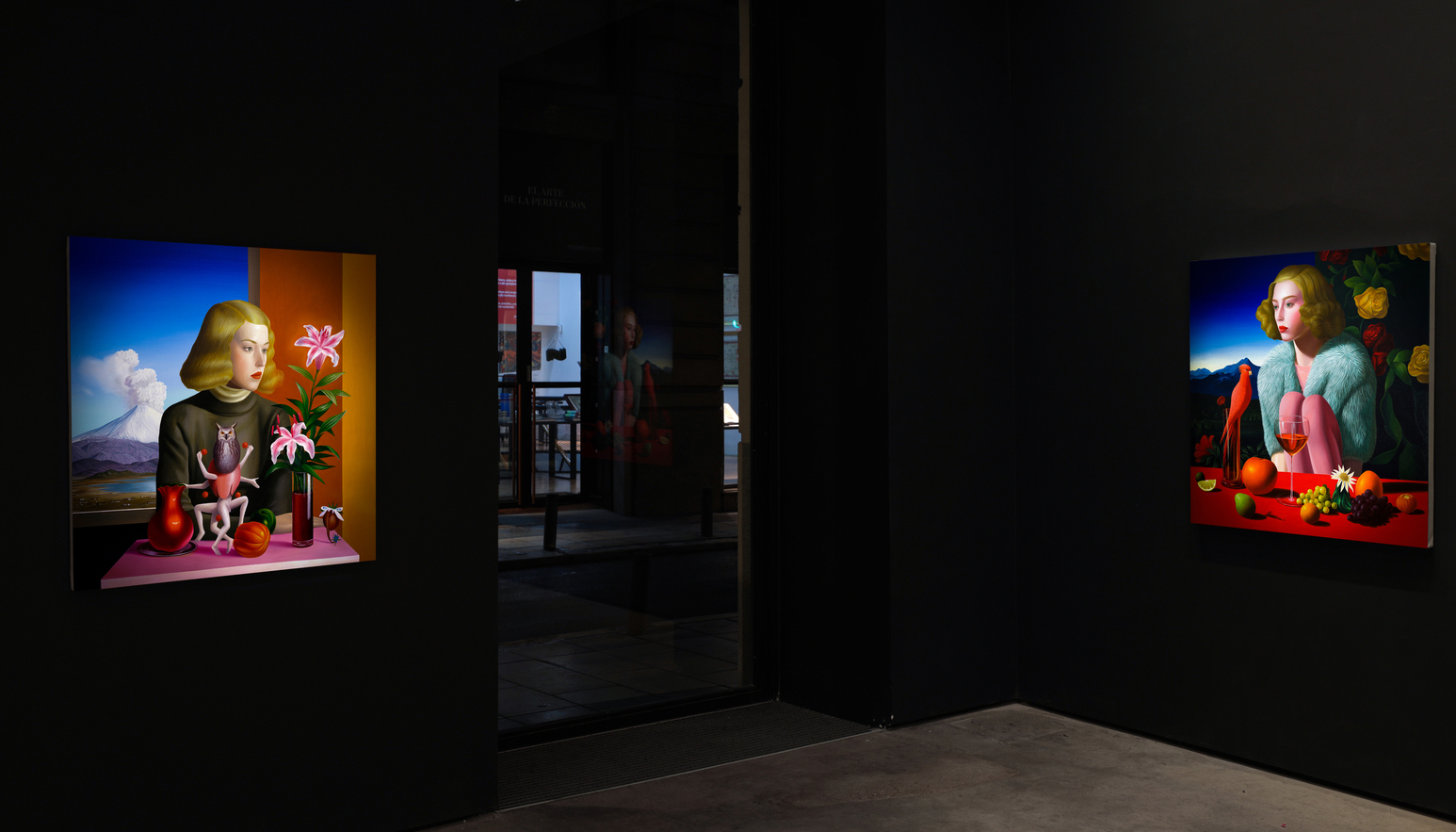
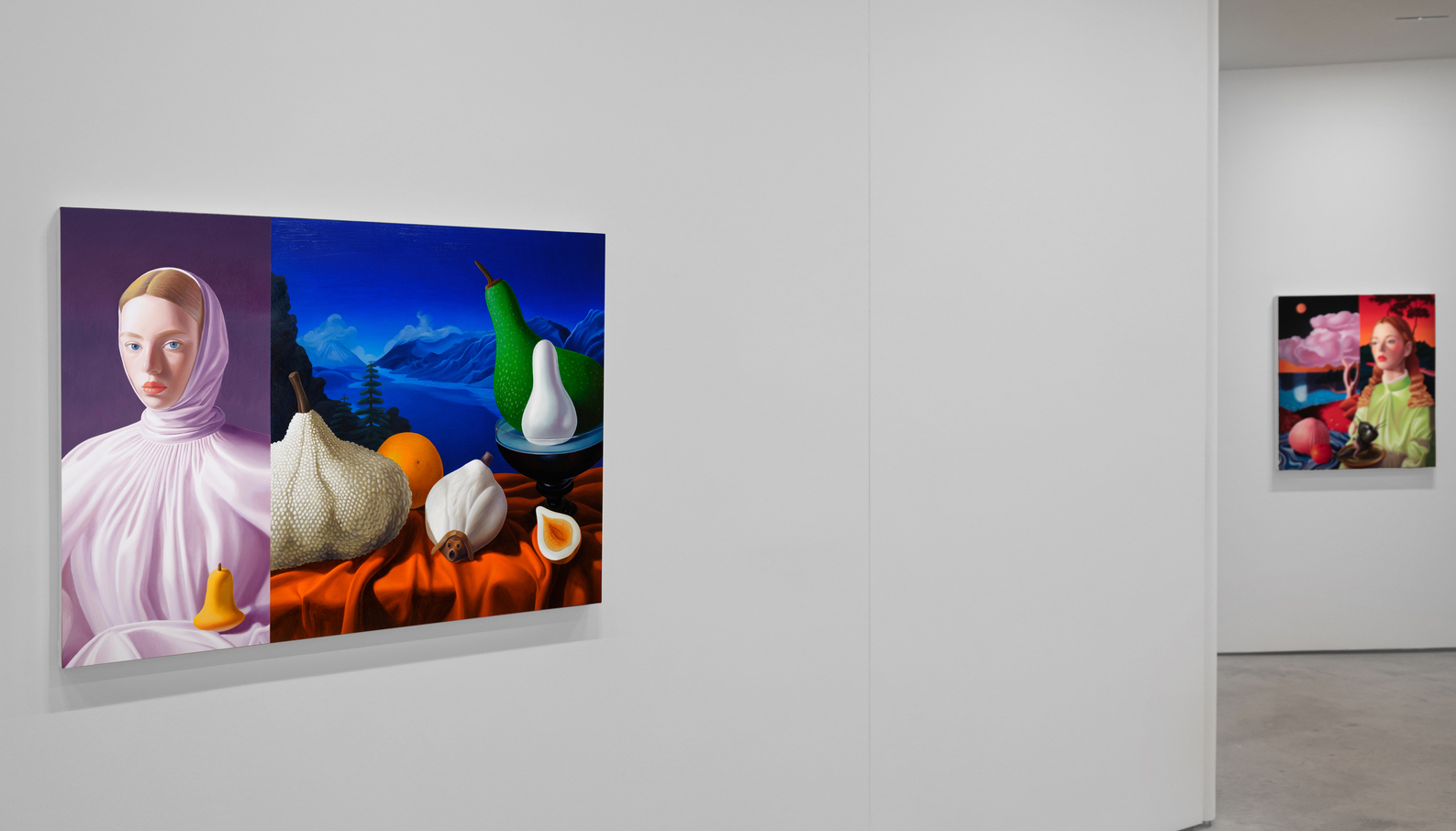
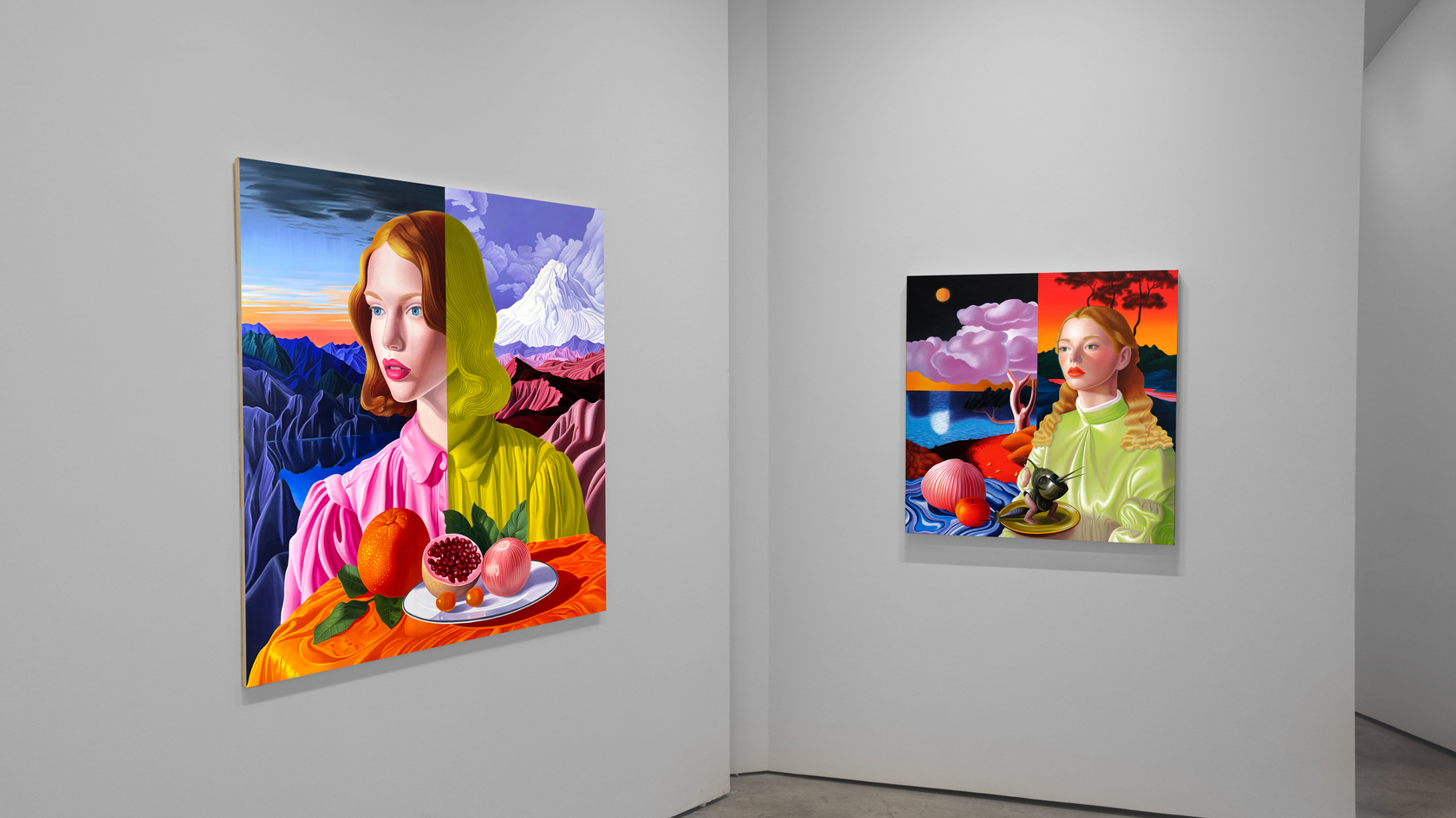
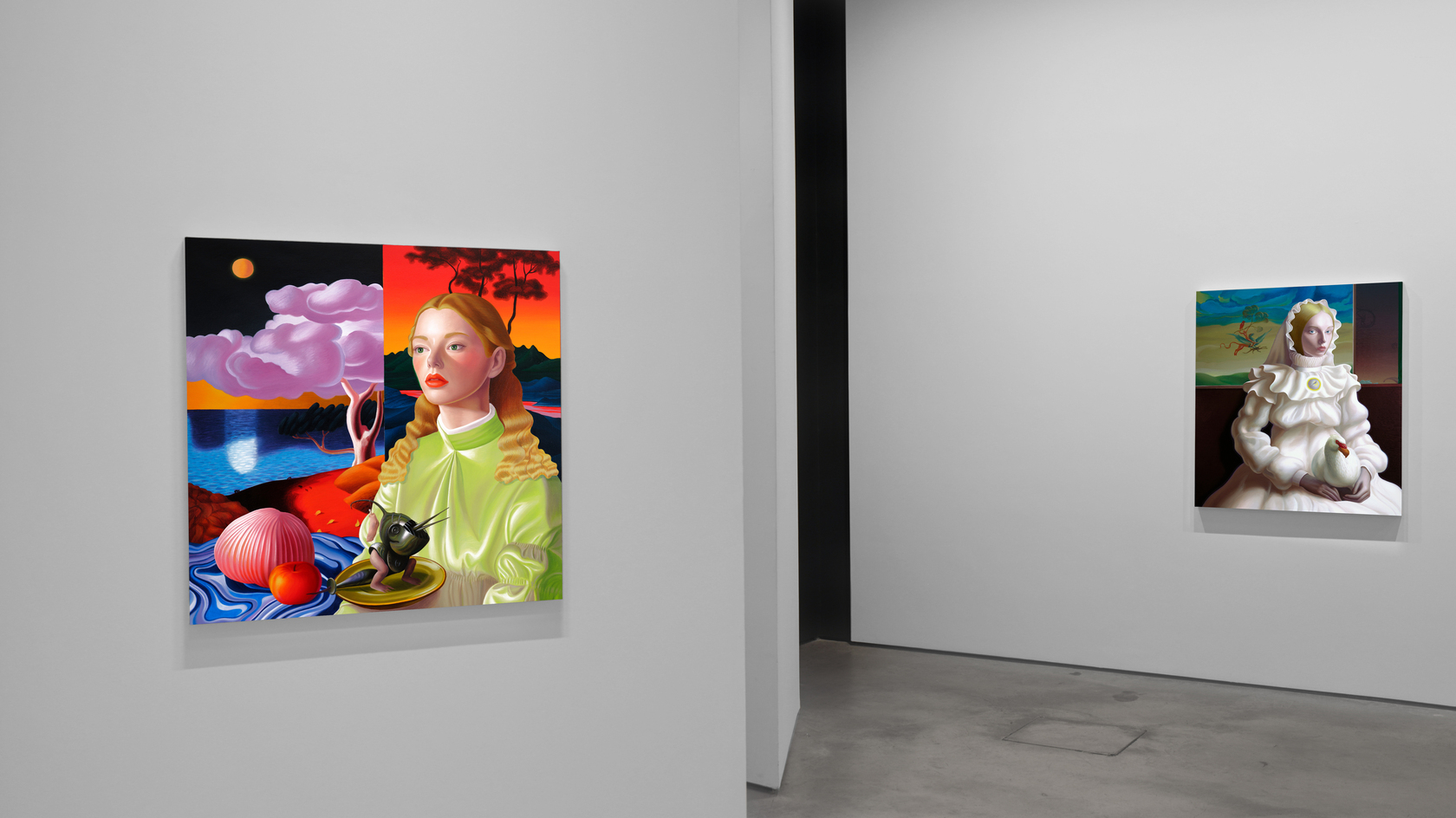
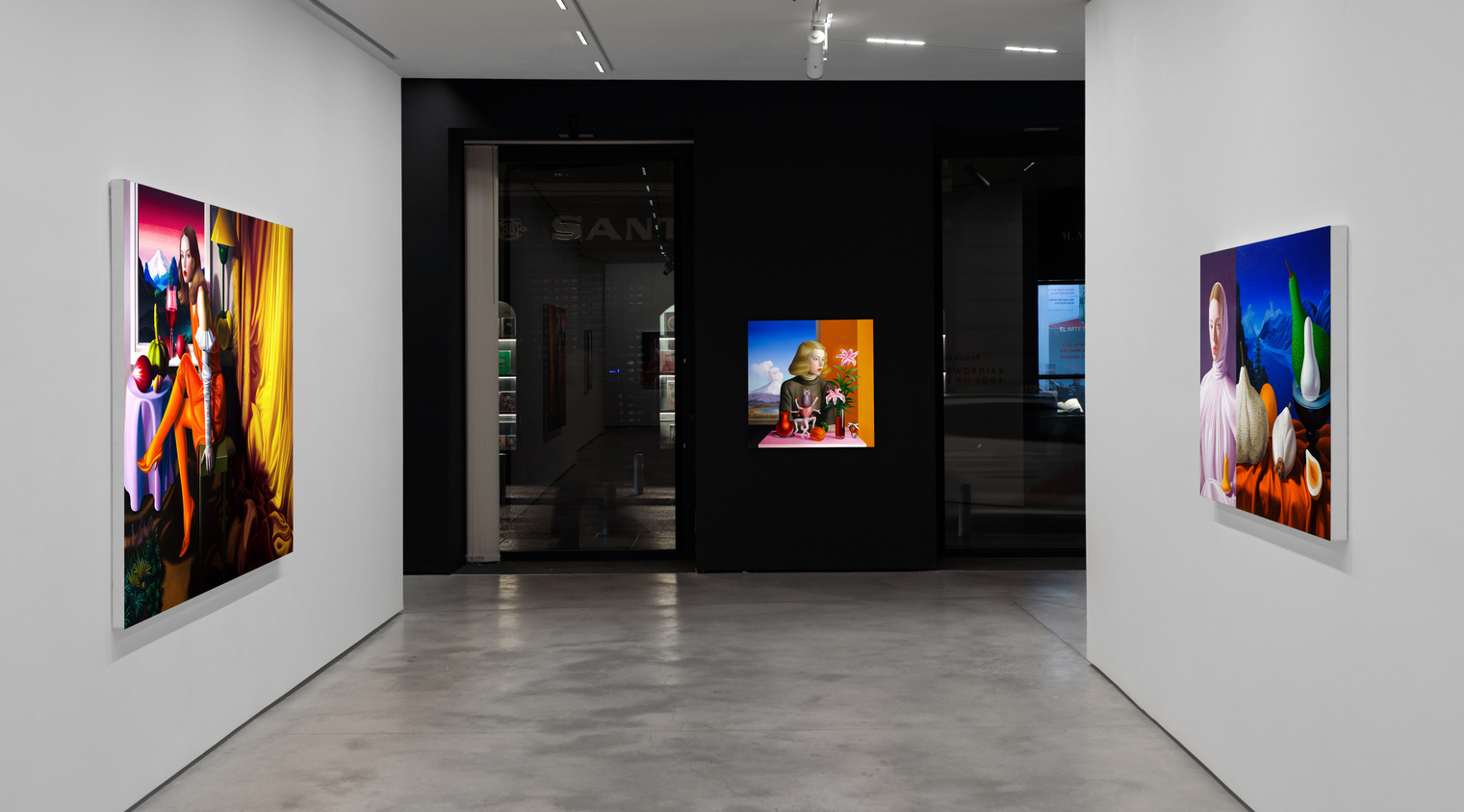
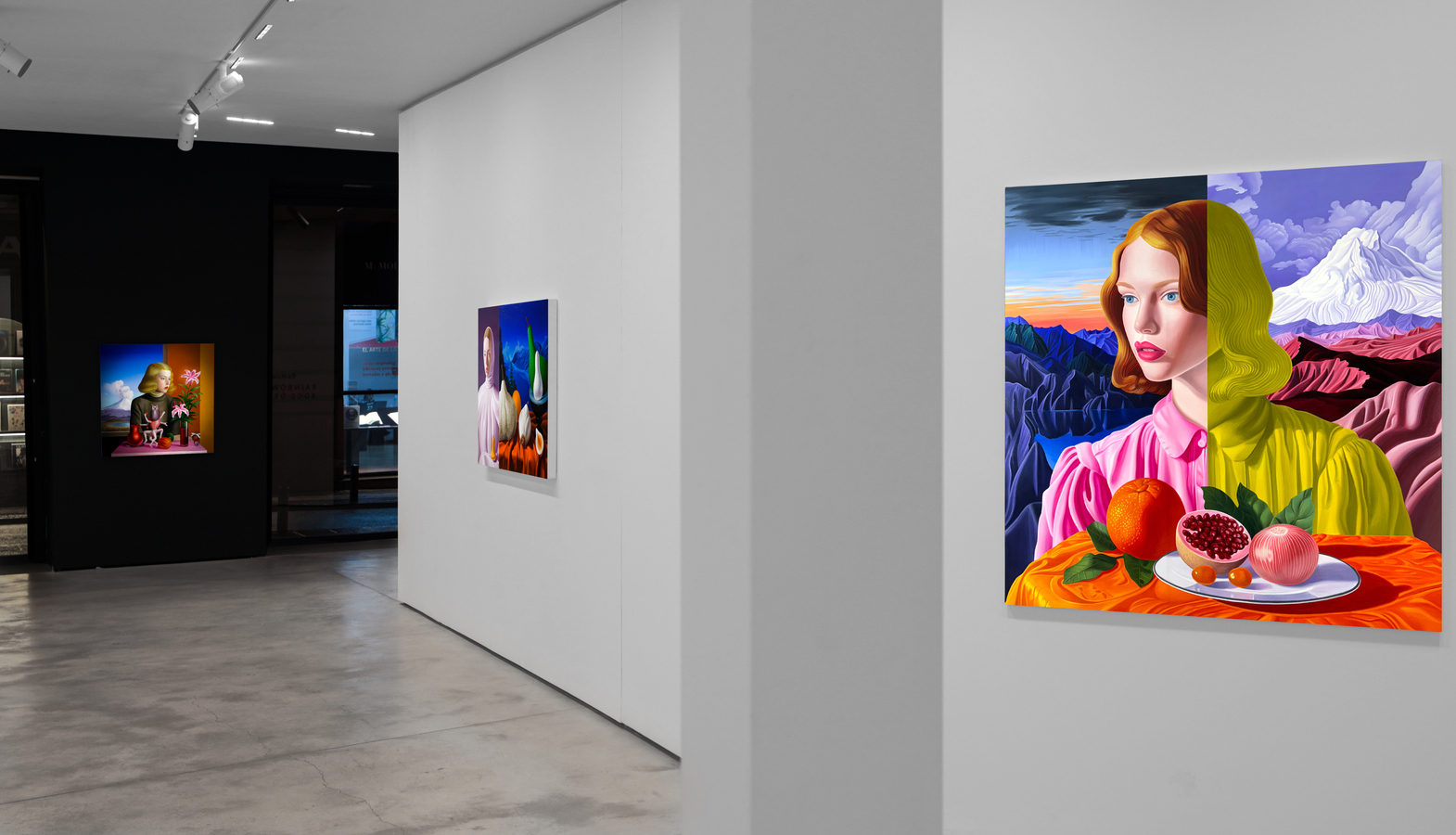
After years of following the Romanian painterly tradition and creating work with a social or political undertone, Grecu wanted to do the opposite: create work that feels shocking in a beautiful way. Thinking of old masters who were ahead of their time in adopting new materials and tools, he turned to AI in search of a concept that could stage a Renaissance-like scene projected into the future. From there, he began to merge three cornerstone motifs of figurative painting —the female portrait, landscape, and still life— into a single pictorial logic. Rather than functioning as separate genres, these elements operate as overlapping registers. Identity, emotion, and presence are conveyed through the figure; a sense of world or context through the landscape; and material, symbolic, or temporal cues through objects and fruit. Combined, they are the ultimate figurative painting toolkit, an all-star cast of figurative painting elements capable of producing dense, layered compositions.
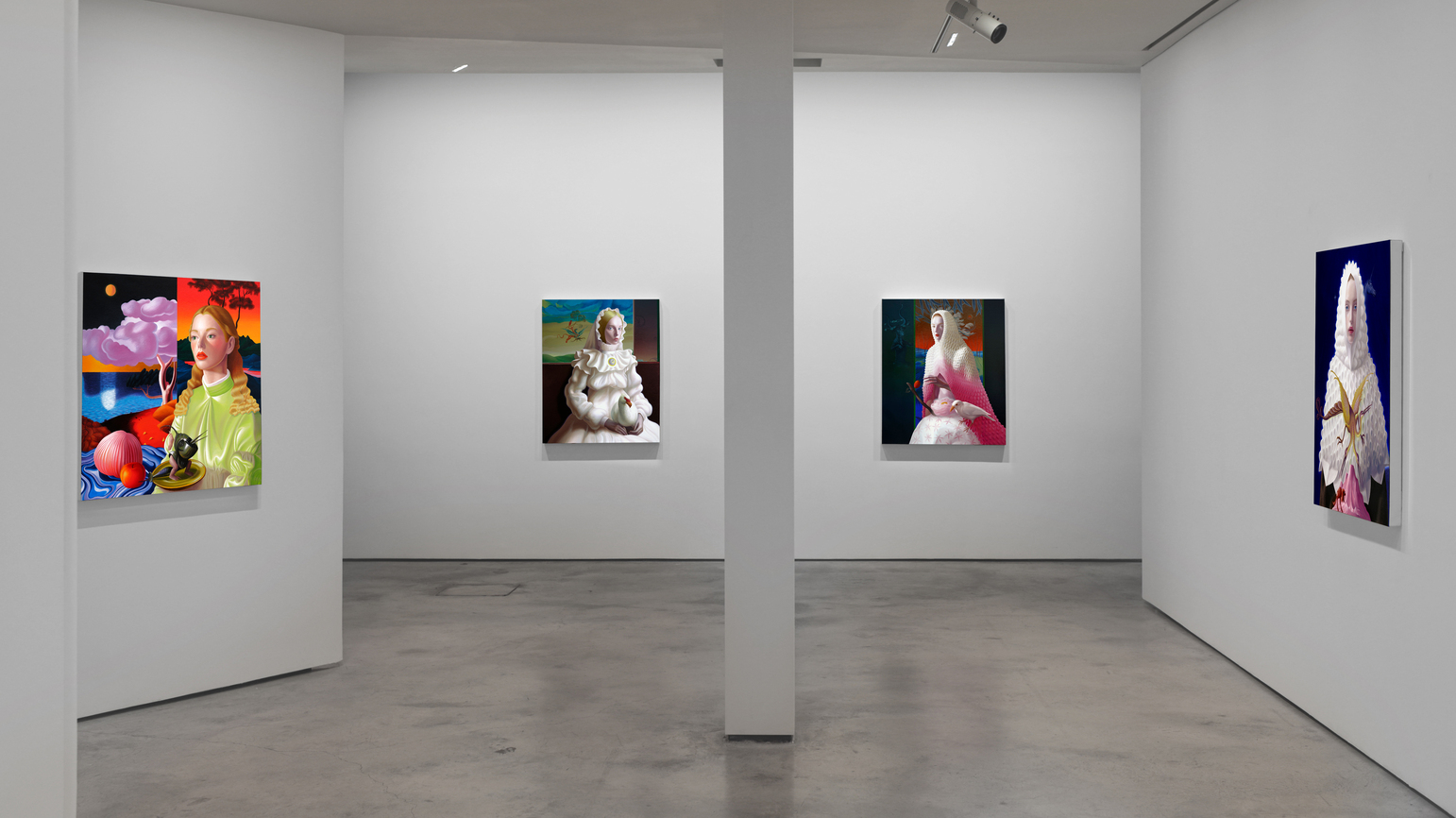
This idea was initially inspired by Ghirlandaio’s An Old Man and His Grandson, by encountering the vibrant colors of Lorenzo Lotto’s paintings, and by a desire to capture the polished, technology-backed aesthetics of the 21st century. As a result, rather than cultivating dor —the pervasive, melancholic longing associated with the Romanian painterly tradition— , Remus Grecu’s new works focus on a plastic-like idealization of beauty. Instead of timeless rural life and stoic portraiture, his central subject becomes the perennial motif of the female muse, accompanied by equally timeless still-life and fruit arrangements. The atavistic bond between people and land is absent, and these numb, porcelain-doll-like figures are staged at a deliberate distance from their natural surroundings. The full spectrum of bright, vibrant colors —Grecu applies several layers of natural pigments— has replaced the commonly grounding palette of deep ochres and “dirty” whites, while the heavy, sculptural impasto gave way to a silky, glossy rendition that underscores the impossible perfection. In this way, Grecu shifts from a synthesis of Byzantine spirituality and earthy Western Modernism toward a hybrid of Western Classicism and the artificiality, sublimity, and glitchiness of Midjourney AI. He’s using these elements as three ingredients in a dish that will always taste good, but the flavor Will change slightly each time.
Not hiding the artificial origin of such perfection, Remus Grecu’s sitters are not real people but hybrids of sorts. They’re the result of a back-and-forth dialogue between the artist, who supplied his photographs, and the technology that continually modified them in response to his prompts. As such, they feel like prototypes, a manifestation of an idea of what that model should look like. Their ageless, peak-beauty appearance is inspired by Voltaire’s notion of fading grace in Candide, and they’re placed in ambiguous interiors often adorned with Rubenesque drapery. The idea of capturing the non- existing, imaginary, or surreal extends to the depicted fruits, which are frequently idealized beyond recognition or entirely invented. The same applies to the occasionally appearing animals, particularly birds —symbols of freedo —, which are also mutants composed of features from different actual species. Grecu even adds entirely impossible, pseudo-representational elements as a sobering reminder of the gap between reality and what is portrayed. In this way, he is almost mocking the human desire for perfection and the Icarus-like determination to reach what is, in fact, unattainable.
All this leads to the purposeful inclusion of glitches. Clothing shifting between dress and pants, or proportions, perspective, and depth refusing to follow a single logic —act as a counterweight to the otherwise calming image of beauty and perfection— evoking surprise, shock, and confusion. And while initially employed to introduce strangeness into otherwise picture-perfect scenes, Bosch’s demons, goblins, and ghouls serve as warning signs of things actually being twisted. Unlike the original paintings, which used them as “mirrors” of human depravity, they’re now protecting us from falling for a deliberately constructed illusion. The perfection of the image thus provides a moment of respite, serenity, and a break from the cruelty and weight of a reality we are otherwise acutely aware of. Although similar in composition and general structure, each work is meant to contain its own universe and to function individually. This, again, echoes Voltaire’s Candide, which suggests that the only way to find peace is to stop obsessing over abstract metaphysics and simply “cultivate one’s own garden.”
The portrayed landscapes typically follow the classical “world landscape” (Weltlandschaft) tradition. This imaginary panoramic format is seen from an elevated viewpoint and characterized by a high horizon line and a panoramic view that suggests the entire cosmos. With elements nodding to Bosch’s distant lands —seen through the lens of medieval visual culture—, Rousseau’s lush, hallucinatory jungle landscapes, or Kahlo’s vibrant tropical scenery, Grecu searches for a balance between imagination and familiarity, wonder and appeal. Another shared quality is the feeling of “manufactured” rather than natural, which permeates the entire language and concept. The Flemish pioneer of the panoramic perspective cleverly synthesized various non-referential influences into his symbolism-filled layouts and emphasized the idea of a false paradise.
The French post-Impressionist employed a sense of Naïve or Primitive “wrongness” to make the flattened and collage-like landscapes and foliage feel surreal and claustrophobic. And Remus Grecu occasionally borrows these tried-and-tested strategies alongside synthetic perfection to build scenery that is equally ideal and impossible, and therefore both enchanting and humbling. Although not immediately noticeable, such “realism” feels “cruel” because it subtly exposes the decay or imperfection of the real world. Its vitreous clarity is cold, sharp, transparent, and stripped of any comforting illusions, and as such, it provides a sudden, refreshing —if slightly uncomfortable— sense of clarity. A clarity that becomes a point of rupture where the painted perfection breaks the viewer’s immersion and makes one soberly aware of one’s own reality. It creates a moment that allows us to see beyond the ethereal Rainbows at the Edge of Sorrow.
— Saša Bogojev
 YUSTO / GINER MADRID
Laura Lagraña a.k.a. Culitomatón en Vogue
https://www.vogue.es/articulos/culitomaton-laura-lagrana-artista-ceramica-esculturas
PAC | Memories in motion
https://www.plataformadeartecontemporaneo.com/pac/memories-in-motion-propuesta-curatorial-de-geraud-jean-claude-y-yusto-giner-marbella/
KOAX Magazine | Line Finderup
https://koaxmagazine.com/what-was-i-made-for-line-finderup/?utm_campaign=newsletter&utm_medium=email&utm_source=mailing13
ELM Art | Fran Baena
ELM ART (1)
El Pespunte | Fran Baena, The broken mirror of the present
https://www.elpespunte.es/fran-baena-el-espejo-roto-del-presente/
Medium | Ángeles Agrela: Portraiture as Symbolic Construction and Visual Resistance
https://medium.com/@sarah_renerr/%C3%A1ngeles-agrela-portraiture-as-symbolic-construction-and-visual-resistance-6f1129436e0f
Ángeles Agrela designs the poster for La Mar de Músicas 2025 and reinvents female representation
https://www.laverdad.es/culturas/musica/angeles-agrela-disena-cartel-mar-musicas-2025-20250320132033-nt.html?ref=https%3A%2F%2Fwww.laverdad.es%2Fculturas%2Fmusica%2Fangeles-agrela-disena-cartel-mar-musicas-2025-20250320132033-nt.html
Magda Kirk and Fran Baena among the most surprising projects at UVNT25 – Vanidad Magazine
https://vanidad.es/uvnt-art-fair-2025-mejores-proyectos/
Interview by Fran Baena in the magazine “Dosis Kafkiana” n16
https://www.dropbox.com/scl/fi/qhvzhta63brhr5sg6rrmw/Dosis-Kafkiana-16-Revista.pdf?e=2&fbclid=PAZXh0bgNhZW0CMTEAAaaUtoHzztfJNFTcOGojKS4pkTSSuvSfUVEaH-wH-2eCErolZPCtRYw19Gs_aem_UFcI35S161RiPZJwJ4A0EA&rlkey=kkf9jzb2nbi39fi9qzc4sz2wp&st=vcnxm9gb&dl=0
Miguel Scheroff en la edición de diciembre de la revista NUEBO. pág 80-89
https://issuu.com/nuebomagazine/docs/nuebo_29_diciembre_2024